
News
Air Taxis Fly Over Jerusalem As Israel Creates Airspace Network
Demo flights of the Chinese-made Ehang two-seater air taxi have commenced from Jerusalem’s Hadassah Hospital.

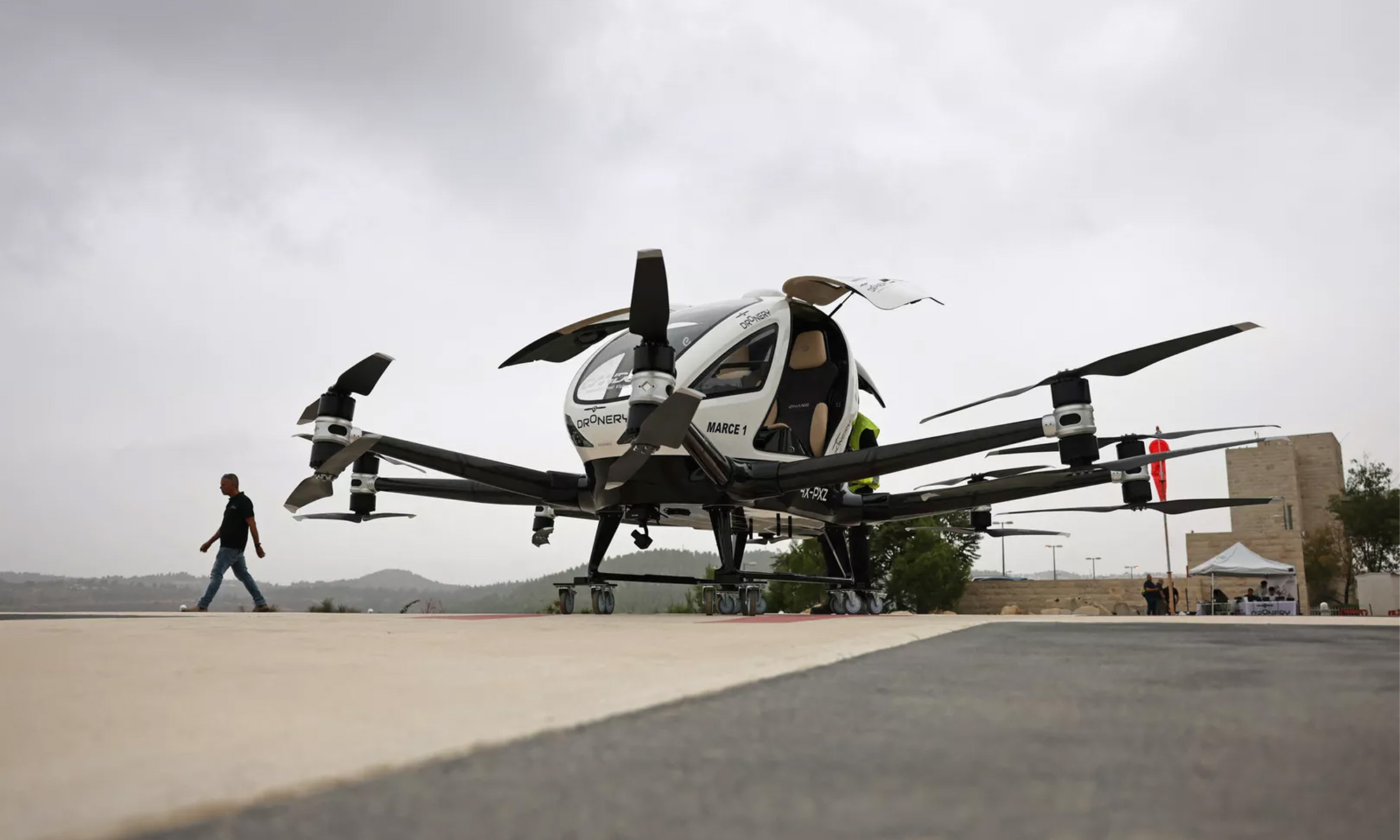
Israel has expanded air taxi test flights across urban areas of Jerusalem in preparation for a new drone delivery network of heavy cargo and passengers.
The demonstration, which showed how drones could ease congestion in the busy city, is part of a $15.7 million government pilot project known as the Israel National Drone Initiative (INDI).
The tests began with a half-hour flight of a long-distance Chinese-made electric vertical takeoff and landing (eVTOL) drone from Jerusalem’s Hadassah Ein Kerem Hospital. The setting for the tests is significant, as the government plans to use the drones for life-saving missions, as well as cargo and passenger purposes.
“What we’re looking at here is how Israel’s National Drone Initiative is expanding its scope to move beyond transporting packages to transporting human beings,” explained Daniella Partem, senior director at the Israel Innovation Authority. “We are looking to improve the economic viability of this model and advance connectivity in urban areas and further afield around the world”.
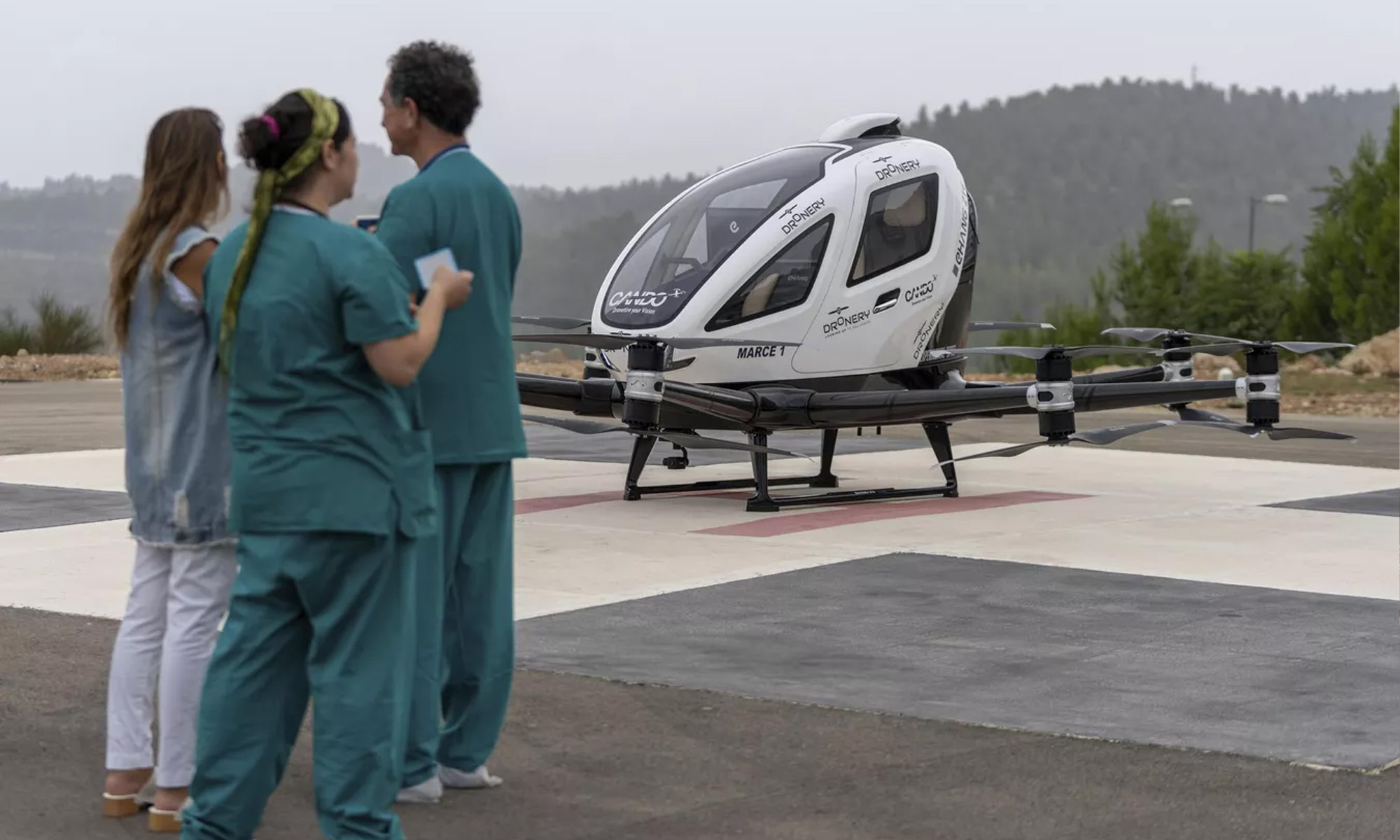
The air taxi test was performed by Dronery, a subsidiary of the Israeli drone delivery fleet operator Cando Drones. The fully autonomous EH216 aircraft can carry a 250-kilogram payload for 30 kilometers using an intelligent command-and-control system that includes a real-time video feed.
“The possibility of flying the aerial taxi in the early stages within an urban area as complex as the Hadassah Medical Center is a practical realization of the Transportation Ministry’s belief [in smart transportation],” said Cando Drones CEO Yoeli Or. “Cando and Dronery are the first in Israel to bring and fly heavy drones capable of flying significant distances and carrying over 200 kilograms”.
Also Read: Blinx Brings Fresh Storytelling & News To Middle Eastern Youth
During a recent June demonstration, the startup AIR also tested its own all-electric eVTOL, known as AIR ONE. The craft features collapsible wings for easy storage and is marketed as an everyday alternative for short city commutes.
Other Israeli companies involved in the INDI project include Airwayz Drones, a provider of AI-based smart management systems for drone fleets; HighLander, which has developed a traffic management system for drones; and Robotican, a producer of ground and air-based autonomous robotic systems.




News
Abu Dhabi’s Robot Kitchen Is Serving Up Biryani, Not Burgers
Circus SE wants to put a tiny automated factory inside the buildings where Gulf residents live and work, bypassing part of last-mile delivery.
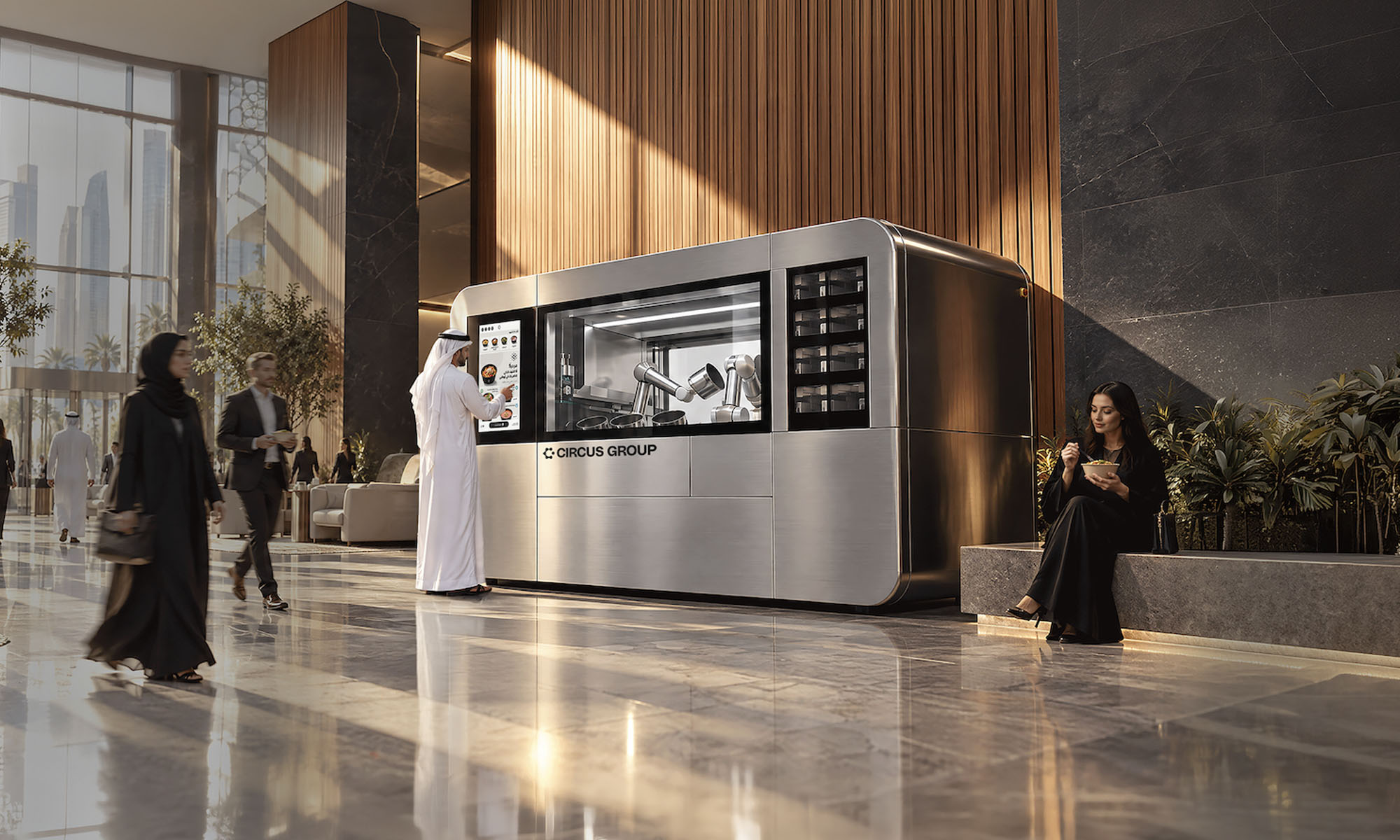
The most telling thing about a new autonomous kitchen now running in Abu Dhabi’s Marina Square is what it won’t cook:
“We don’t do fast food,” says Nikolas Bullwinkel, Founder and CEO of Circus SE. “We’ve actively decided not to build a machine that can only do burgers”.
Instead, the CA-1 system is built around pot-based cooking: curries, pastas, soups and rice dishes. After experimenting with highly personalized recipes, Circus deliberately leaned back toward recognizable food. “We’re going with a chicken biryani because you know it,” Bullwinkel says of the AED 40 dish.
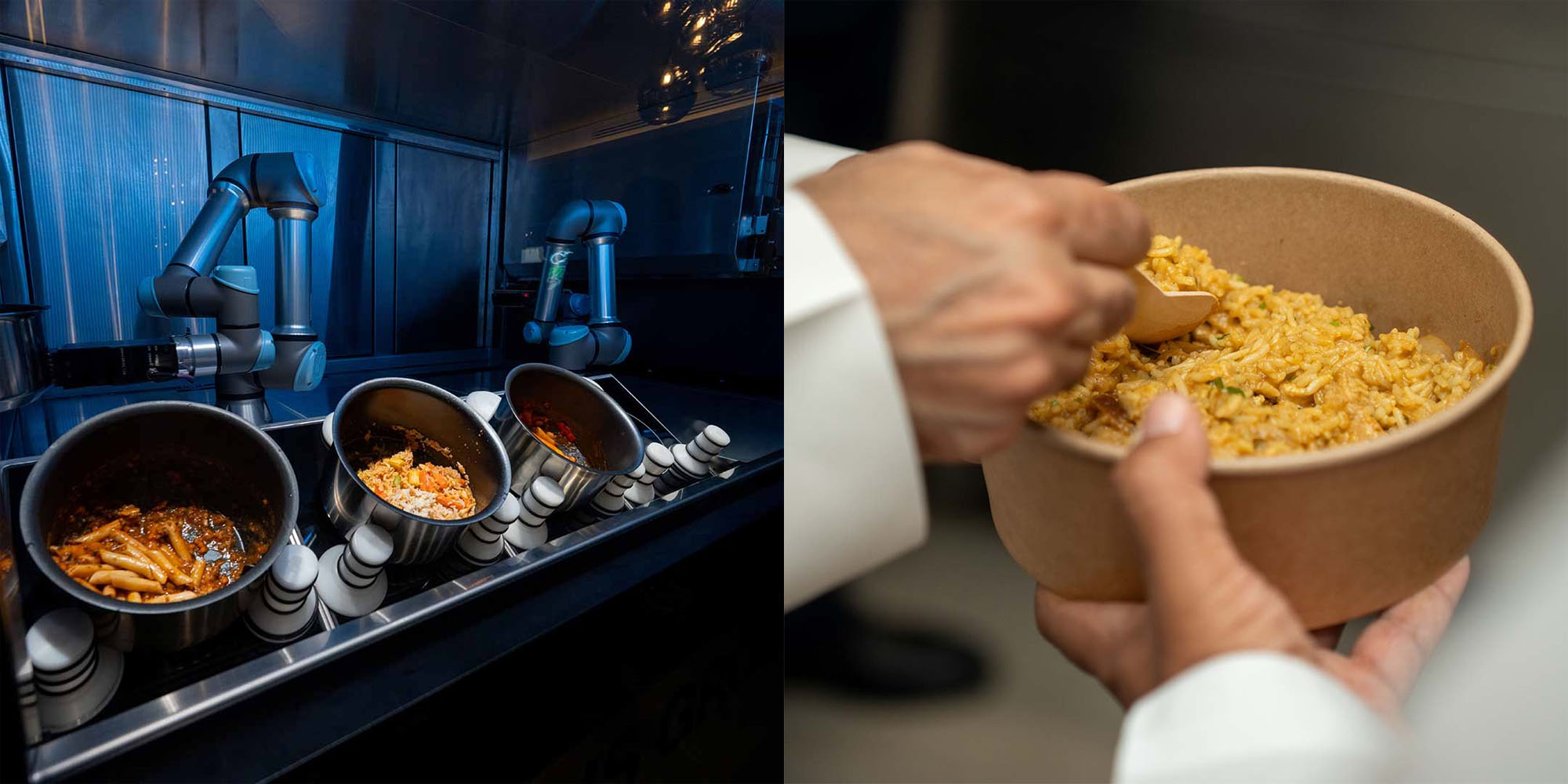
The Germany-based robotics and food technology company operates across eight countries, and Abu Dhabi is its first deployment outside Europe. More locations are expected there and in Dubai.
In Germany, its units can be placed in supermarkets, gas stations, airports and hospitals. In the Gulf, Bullwinkel wants them inside residential and office buildings, replacing some of the complexity of last-mile delivery. “We’re basically bringing a very tiny factory a few square meters into your building,” he says. Catering company Royal Prestige supplies the ingredients and knowledge of local tastes.
The CA-1 manages up to 36 refrigerated ingredient silos alongside automated induction cooking, robotic plating and a self-cleaning dishwasher. Two robotic arms move ingredients through the system with minimal human intervention. It can produce up to 120 hot meals an hour, and a meal such as rice and curry can take around three to four minutes.
Also Read: Ooredoo Qatar’s 5G+ Network Is Built For Machines As Much As People
Five cameras and multiple sensors monitor heat, temperature and consistency, an attempt to approximate what a chef perceives. “You can hear something gets burned, you can smell it, you can see it at some point,” Bullwinkel says. CircusOS, the company’s operating system, adjusts recipes in real time.
You might think of the platform as a threat to kitchen staff, but Bullwinkel frames Circus as a way for chefs to develop recipes and distribute them at scale. With that being said, rising labor costs and shortages are also part of his case for automation.

Abu Dhabi’s Robot Kitchen Is Serving Up Biryani, Not Burgers

Sennheiser’s MOMENTUM 5 Series Bets On Batteries You Can Swap

UAE’s 3-Minute University Registration Runs On Government Data

How Online Ads Became A Delivery System For Zero-Click Spyware

Shokz OpenDots 2 Review: Clip-On Audio Gets A Bass-Heavy Makeover

In Kuwait, Your Surgeon Might Be Operating From Another Country

Microsoft Plans $10 Billion-Plus Gulf Expansion Despite Iran Conflict

Qatar Folds 45 State Companies Into A Single Investment Platform

NEOPAY Wants To Follow Merchants Across Channels And Borders

RØDE’s Low-Profile Studio Arm Is Designed To Stay Out Of Shot


-
 News2 weeks ago
NEOPAY Wants To Follow Merchants Across Channels And Borders
-
 News3 weeks ago
RØDE’s Low-Profile Studio Arm Is Designed To Stay Out Of Shot
-

 News2 weeks ago
For etisalat, More Bandwidth Is A Matter Of Digital Sovereignty
-

 News2 weeks ago
Dubai Says Its Deepfake Detector Needs Just 7 Seconds Of Video