News
Airbus Has Revealed Its CityAirbus NextGen Flying Taxi
During flight, the aircraft makes less than 65 decibels of noise, and the figure increases to just 70 decibels during landing.


Nobody likes to sit in traffic, especially not people who can afford to hire their own private jet, and that’s exactly who Airbus is targeting with its next-generation CityAirbus, an electric vertical take-off and landing aircraft (eVTOL) offering for the emerging urban air mobility (UAM) market.
The European multinational aerospace corporation has recently unveiled the new aircraft at its first summit on “Pioneering Sustainable Aerospace”. The CityAirbus NextGen incorporates lessons learned from the design and test operation of the original CityAirbus and the single-seat, tilt-wing Vahana.

It has six electrically powered lifting propellers and two additional electrical propellers on its V-shaped tail for cruise flight, the phase of flight between climb and descent. Airbus claims that it can cover a distance of 80 kilometers (50 miles) at a cruise speed of 120 km/h (75 mph) while carrying up to four passengers. During flight, the aircraft makes less than 65 dB(A) of noise, and the figure increases to just 70 dB(A) during landing.
“The CityAirbus NextGen meets the highest certification standards (EASA SC-VTOL Enhanced Category),” states Airbus in the official press release. “Designed with simplicity in mind, CityAirbus NextGen will offer best-in-class economic performance in operations and support”.
Also Read: Mercedes Concept EQG Electric G-Class Revealed In Munich
Airbus is aware that far more obstacles besides those that can be solved with innovative technology will need to be overcome for the new urban air mobility market to flourish. That’s why the CityAirbus NextGen will initially be piloted by a real human pilot. Once the technology and operational framework for self-flying aircraft are established, Airbus would like the aircraft to operate autonomously.
How long that will take to happen is something even industry experts can’t reliably predict, especially not on a global scale. What’s certain is that flying across major cities won’t be something anyone besides one-percenters will be able to afford for a long time — and maybe never.




News
Lebanon Ministers Meet Visa Over National Digital Payment Platform
Finance and technology ministers say a comparative study and roadmap will follow before any decision on adopting a model.


Lebanon’s finance and technology ministers met representatives from Visa last week to discuss a proposed unified national digital payment platform for government services, according to a readout from the Ministry of Finance.
The meeting brought together Finance Minister Yassin Jaber, Minister of State for Technology and Artificial Intelligence Kamal Shehadeh, a Visa delegation, and experts from both ministries. Discussion focused on whether Lebanon could establish a single platform through which citizens and institutions would pay taxes, fees, fines and other official transactions electronically, using mobile phones and other digital channels.
The Visa delegation presented examples from countries that have adopted unified government payment platforms, including the United Arab Emirates, Singapore, Estonia and Jordan. According to the readout, the examples were presented as having increased collection rates and expanded financial inclusion.
Talks covered settlement mechanisms, direct transfer to the treasury account, financial reconciliation, risk management, cybersecurity, fees, and an operational model that would involve the private sector. The parties agreed to continue technical and institutional consultations, prepare a comparative study, and develop an implementation roadmap before any decision on adopting a model for Lebanon.
Jaber said the Ministry of Finance had already enabled citizens to pay using credit cards and e-wallets through transfer companies, but described the proposed platform as a further step. He framed the development of electronic payment and collection systems as a priority within the ministry’s modernization plan.
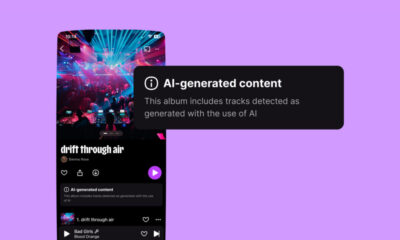
Also Read: Deezer Says AI Tracks Now Make Up 44% Of Uploads
Shehadeh outlined the citizen-facing concept as a single mobile application through which users could settle obligations to ministries, government institutions and other bodies.
“The idea, in short, is that any citizen downloads an application on their mobile phone, through which they can pay all service obligations for all ministries, government institutions, or those owned by the Lebanese state, and others as well, as the platform is not limited only to state institutions,” he said.
Shehadeh added that the platform would not displace banks and money transfer companies that currently provide collection services to the state, calling it complementary to their work.

Lebanon Ministers Meet Visa Over National Digital Payment Platform

AltoVolo Releases Sigma Footage & Sets Date For Demonstrator

Careem Launches Lebanon Aid Drive With WFP

United Arab Emirates To Quit OPEC After 59 Years

YouTube Tests Conversational AI Search Tool

Yango Ride Introduces In-Chat Trip Planning In ChatGPT

Deezer Says AI Tracks Now Make Up 44% Of Uploads

NVIDIA Puts GPT-5.5 Codex In Hands Of 10,000 Staff
United Arab Emirates To Quit OPEC After 59 Years