
News
Lebanon Officially Licenses Starlink Internet
Lebanon has officially licensed Starlink, allowing SpaceX’s satellite internet service to operate under a tightly regulated framework.


Lebanon has formally approved the operation of Starlink, SpaceX’s satellite internet service, marking a cautious but notable step toward expanding connectivity in a country long plagued by fragile telecommunications infrastructure.
The decision, issued by Lebanon’s Telecommunications Regulatory Authority (TRA) and published in the Official Gazette, grants Starlink a license to operate under a tightly defined regulatory framework. While the move allows satellite-based broadband to enter the Lebanese market, it stops well short of a full consumer rollout.
What Was Approved
Under the TRA’s ruling, Starlink is authorized to market, operate, and maintain high-speed internet services via satellite systems within Lebanese territory, using satellites operated by SpaceX. The license is explicitly non-exclusive, meaning it does not grant the company any monopoly or preferential right, and leaves the door open for other satellite providers to be licensed in the future.
The approval limits Starlink’s services to specific categories:
- High-speed internet for commercial and business entities.
- Connectivity for ships and aircraft operating within Lebanese land, airspace, or territorial waters.
- Enterprise and institutional services, subject to regulatory and security clearance.
Crucially, the decision does not authorize residential access. As the document states, services are confined to defined professional and commercial use cases, signaling that consumer-facing Starlink terminals remain off the table, at least for now.
Clear Restrictions On Scope
The license also outlines what Starlink is not allowed to do.
According to the decision, the company may not establish or operate international gateways, nor may it provide data transit services or wholesale connectivity to third parties. Starlink is also barred from offering infrastructure-as-a-service products or transferring the license to another entity without prior approval from the regulator.
Any attempt to expand beyond these limits would require a separate licensing process under Lebanon’s telecommunications law.
Security, Data, And Oversight
As with most telecom-related approvals in Lebanon, the decision places heavy emphasis on security and regulatory control.
Starlink is required to comply with laws related to public order, national security, defense requirements, and the confidentiality of electronic communications and data. The company must submit extensive technical, financial, and operational documentation before launching services, including audited financial statements prepared by an approved auditor in Lebanon.
The TRA also makes it clear that it does not guarantee protection from radio-frequency interference. However, Starlink is required to cooperate with the relevant authorities to resolve any interference issues that may arise within Lebanese territory.
Duration And Renewal
The license is valid for a two-year period, beginning from the effective date set by ministerial decree. Renewal is possible, but conditional. The company must apply at least two months before expiration and demonstrate full compliance with all legal, regulatory, and technical obligations.
Why This Matters
Lebanon’s telecom infrastructure has struggled for years under economic collapse, chronic power shortages, and limited investment. Satellite internet offers a potential workaround, particularly for businesses, ports, airports, and institutions that require stable connectivity independent of terrestrial networks.
At the same time, the tightly scoped approval reflects regulatory caution. By limiting Starlink’s reach to commercial and institutional use, authorities appear to be testing the technology under controlled conditions before considering wider deployment.
The Bigger Picture
Globally, Starlink has become a critical connectivity tool in regions with unreliable infrastructure. Lebanon’s decision suggests recognition of that potential — but also a strong desire to retain oversight.
For now, Starlink is officially licensed in Lebanon, but firmly on the state’s terms. Whether this limited approval eventually expands into consumer access will depend on regulatory confidence, security considerations, and how satellite internet performs under this initial, tightly regulated rollout.



News
Deezer Says AI Tracks Now Make Up 44% Of Uploads
The streamer says nearly 75,000 AI-made songs now hit its platform each day, even as those tracks account for just 1% to 3% of plays.

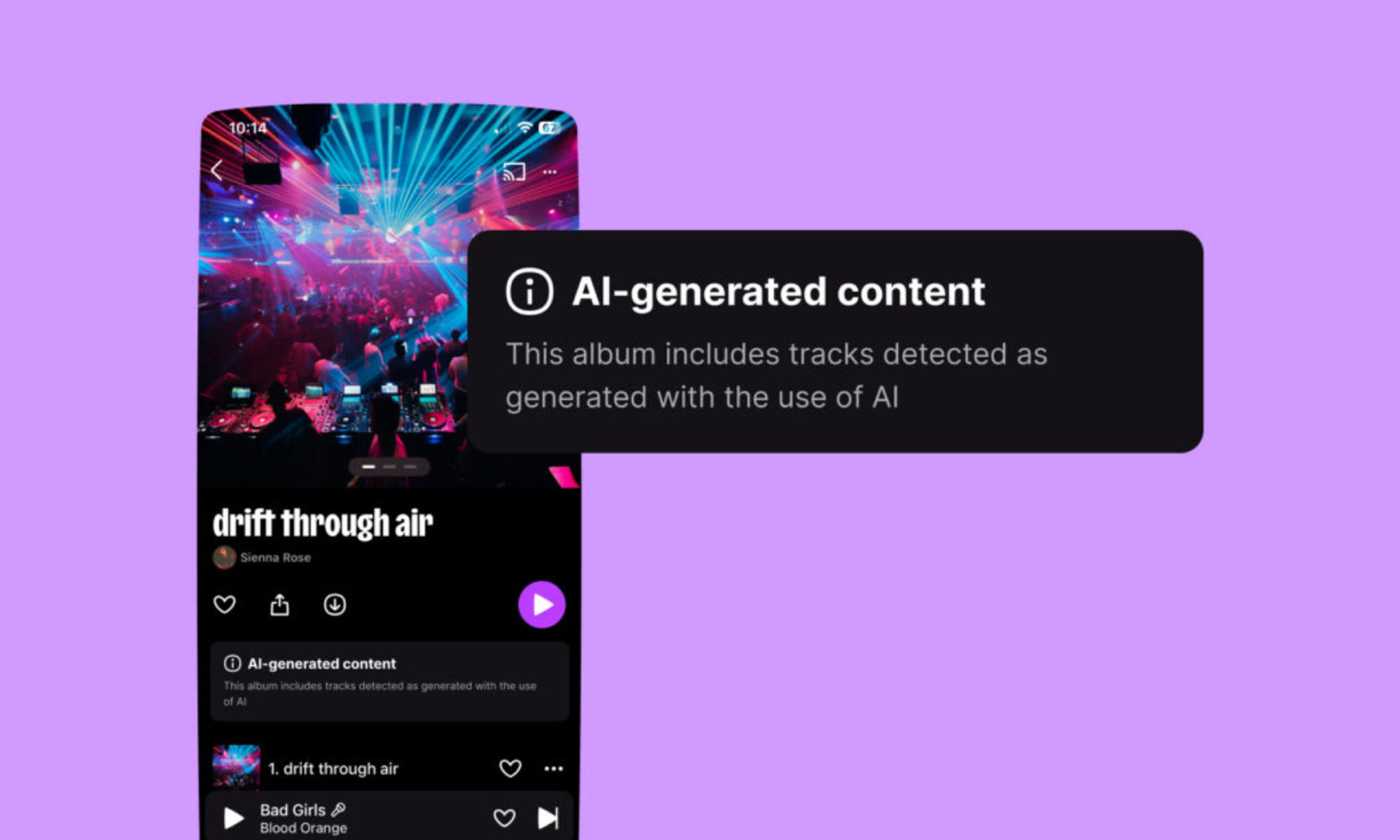
AI-generated music is becoming a real headache for music platforms, according to Deezer. The streaming service says it now receives nearly 75,000 AI-made tracks a day, equal to about 44% of all daily uploads to the platform.
The figure is up sharply from 10,000 daily AI uploads when Deezer launched its detection tool back in January 2025. The jump shows how quickly products such as Suno and Udio have made song creation cheap, fast, and easy to scale.
Despite the volume, Deezer says AI tracks still only account for 1% to 3% of total streams. The music gets few human listeners, but upload pressure is rising. The company says it is also seeing more “fraudulent” submissions.
Its response so far has been practical. Deezer has removed AI-generated songs from recommendation systems, demonetized them, and stopped storing high-resolution versions of those files.
The company also says it’s the only streaming platform currently tagging AI-generated tracks at scale, using that claim to position its moderation tools as a wider industry model.
“AI-generated music is now far from a marginal phenomenon and as daily deliveries keep increasing, we hope the whole music ecosystem will join us in taking action to help safeguard artist’s rights and promote transparency for fans,” CEO Alexis Lanternier said in a blog post.
Deezer has started licensing the detection technology to other companies, turning an internal control system into a commercial product. It says the tool can already identify music created with Suno and Udio, and can be extended to other generators if training data is available.
Also Read: Nano Banana 2 Arrives In MENA For Google Gemini Users
The company is also working on detection methods that would not require training datasets, a harder technical step that could widen coverage as new music models appear.
Rivals are taking mixed approaches. Spotify has rolled out policies aimed at curbing AI music. Apple Music is asking artists and labels to disclose AI-made tracks. Qobuz has begun automated labeling, while Bandcamp has banned AI music outright.
For now, Deezer’s numbers suggest the real issue is not listener demand. It’s supply.

Deezer Says AI Tracks Now Make Up 44% Of Uploads

Yango Ride Introduces In-Chat Trip Planning In ChatGPT

Nano Banana 2 Arrives In MENA For Google Gemini Users

GluCare Rebrands To Metabolic, Dropping Diabetes-Only Identity


