
News
Emirates Just Unveiled The World’s First Robot Check-In Assistant
The airline’s Dubai check-in center lets travelers drop their luggage 24 hours and up to 4 hours before a flight.

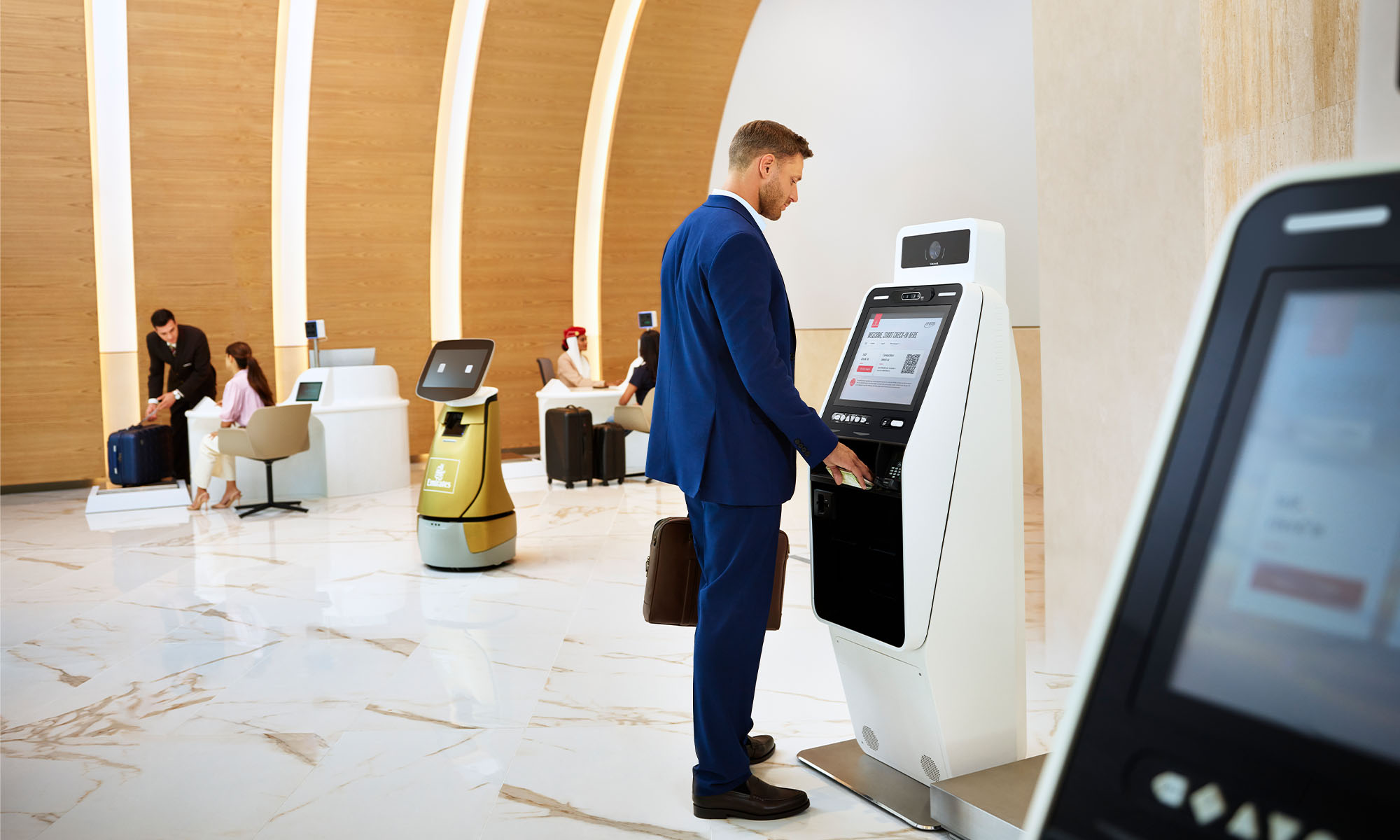
The Dubai-based airline, Emirates, has launched a new check-in facility at the ICD Brookfield Place in the Dubai International Financial Centre featuring the world’s first robot check-in assistant.
The robot, named Sara, can assist customers with a wide range of services, including bookings, check-ins, and luggage drop-offs between 08:00 and 10:00 daily.
After unveiling the new service, Adel Al Redha, COO of Emirates, noted, “It is a state-of-the-art facility, and it is the next level of privilege that we can offer our customers. People can avoid busy periods at the airport and minimize queuing”.
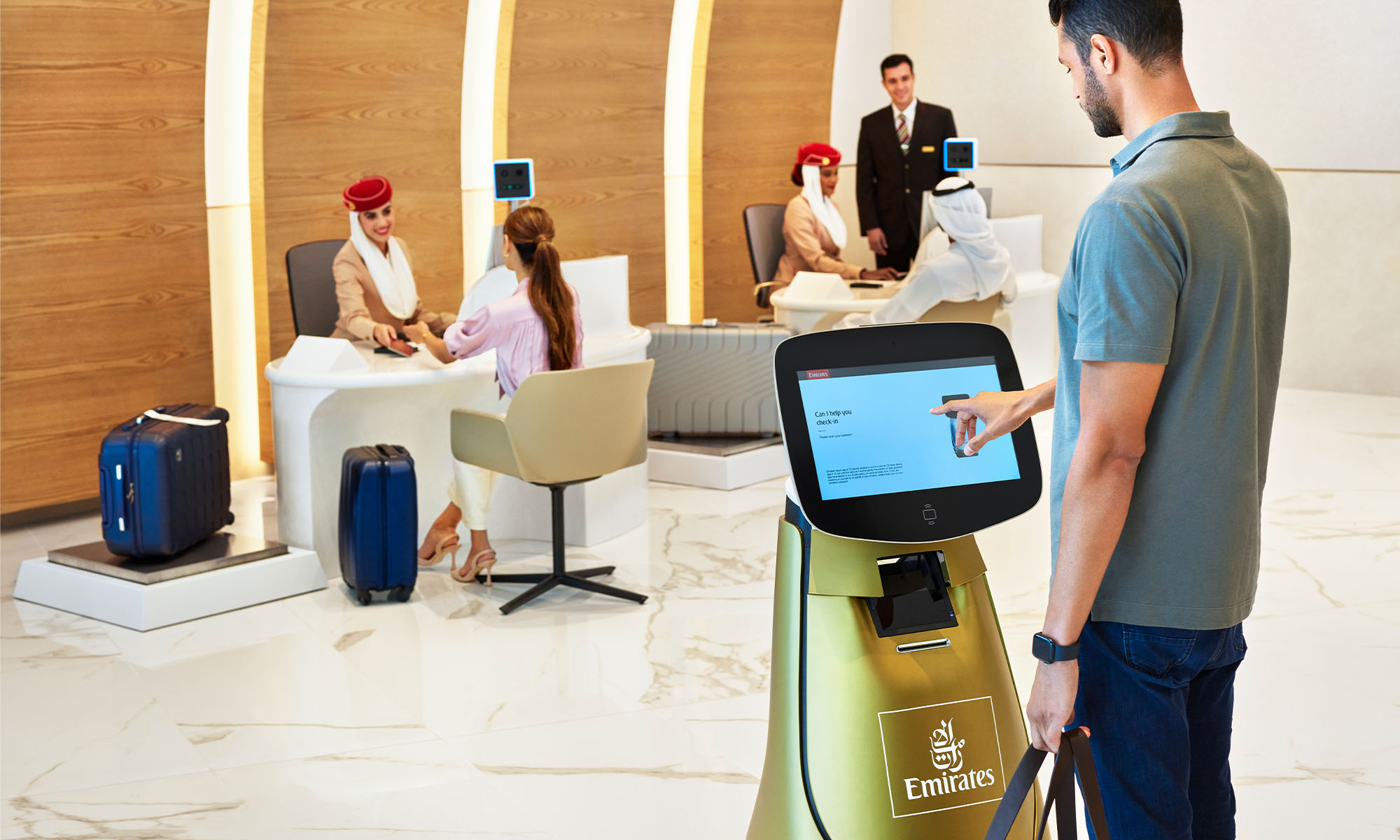
The robot check-in service went operational on Thursday, April 27, and allows customers to drop off luggage as soon as 24 hours and up to 4 hours before a flight, allowing a leisurely and stress-free airport experience.
Emirates flyers can also use the check-in service for expert advice and offers on popular destinations, as well as to manage bookings, purchase upgrades, and choose their preferred seats.
Also Read: Take A Balloon Journey To Space, Complete With Fine Dining!
The robot check-in service premiered at Emirates HQ earlier this year and can scan passengers’ faces and match them to travel documents. With more time on their hands after using the new automated system, Emirates customers will also be able to enjoy discounted services at a range of Brookfield Place facilities, including restaurants, gyms, and high-end stores.
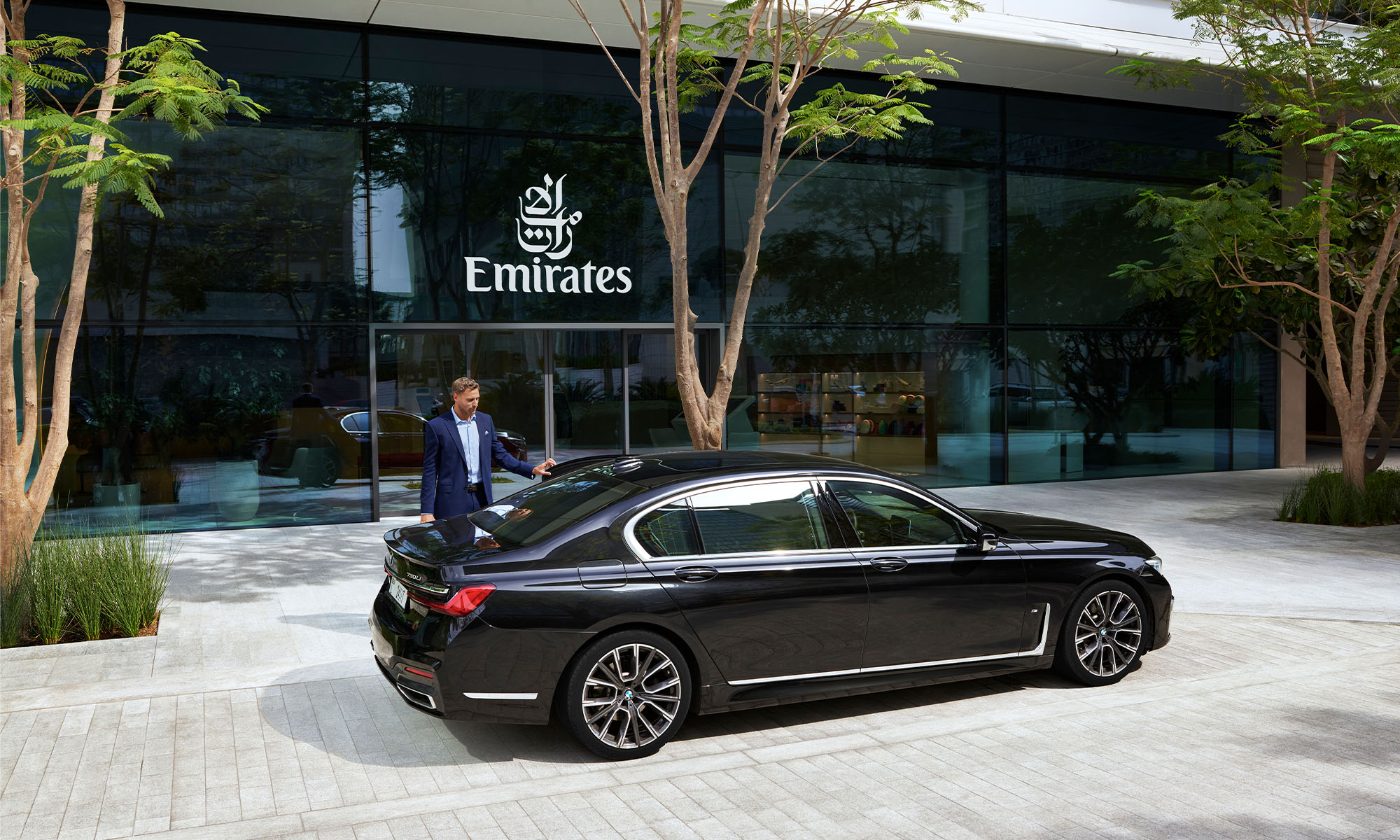
When it’s time to fly, Emirates passengers can travel directly to the airport via taxi or a dedicated Emirates chauffeur service. In addition, the Financial Centre Metro Station connecting Airport Terminal 3 Metro Station is a short 10-minute walk from the ICD.





News
Abu Dhabi’s Robot Kitchen Is Serving Up Biryani, Not Burgers
Circus SE wants to put a tiny automated factory inside the buildings where Gulf residents live and work, bypassing part of last-mile delivery.
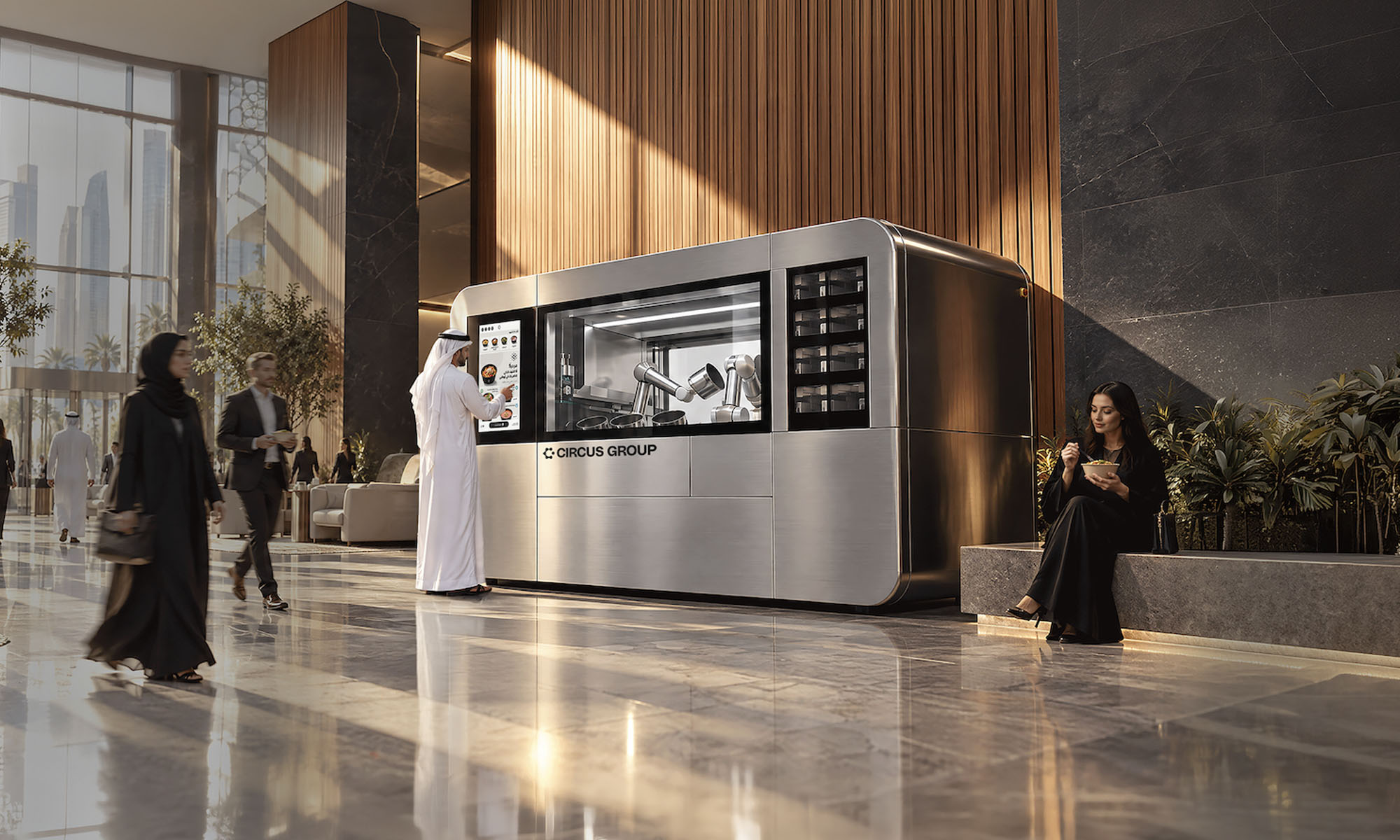
The most telling thing about a new autonomous kitchen now running in Abu Dhabi’s Marina Square is what it won’t cook:
“We don’t do fast food,” says Nikolas Bullwinkel, Founder and CEO of Circus SE. “We’ve actively decided not to build a machine that can only do burgers”.
Instead, the CA-1 system is built around pot-based cooking: curries, pastas, soups and rice dishes. After experimenting with highly personalized recipes, Circus deliberately leaned back toward recognizable food. “We’re going with a chicken biryani because you know it,” Bullwinkel says of the AED 40 dish.
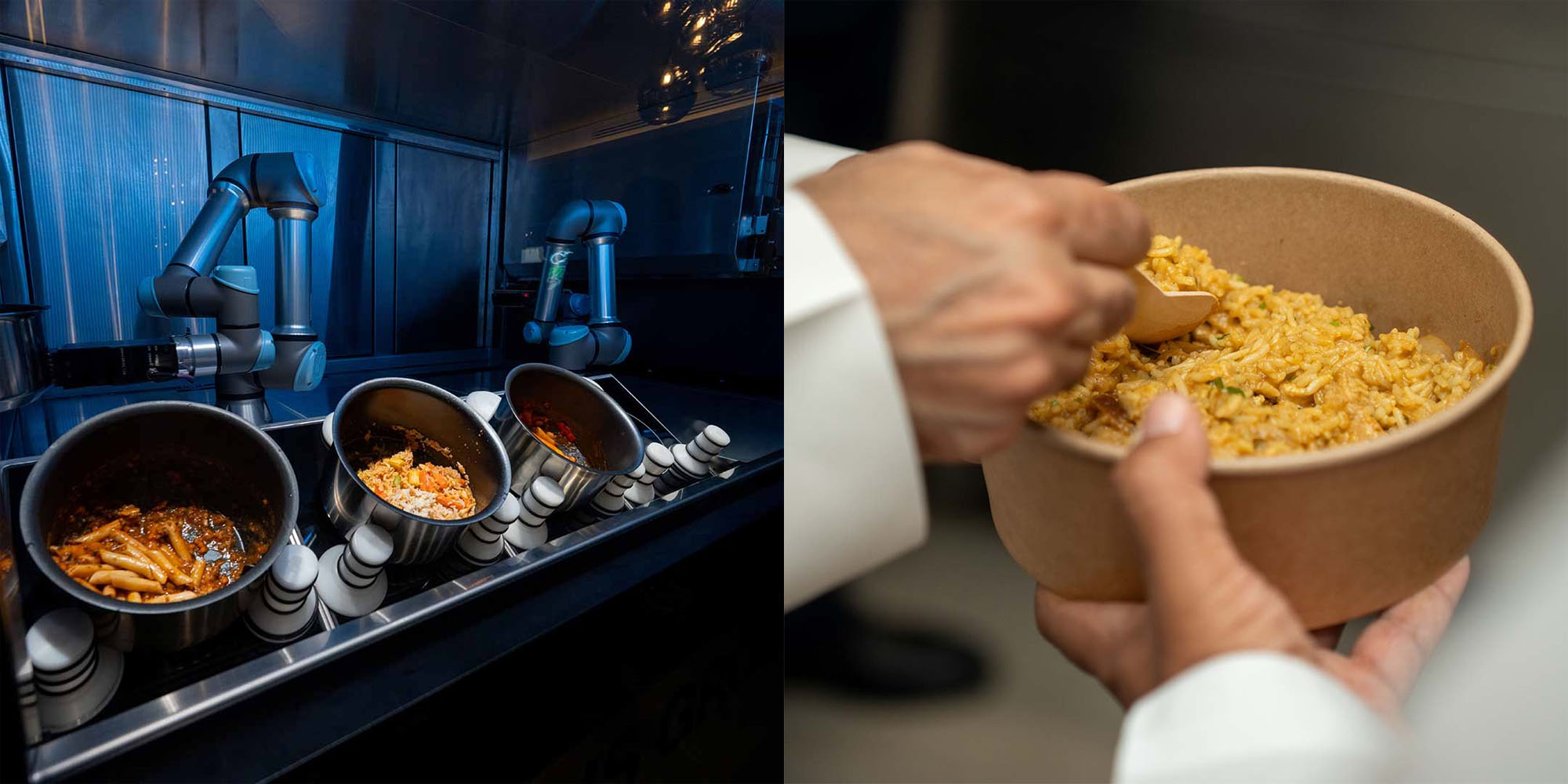
The Germany-based robotics and food technology company operates across eight countries, and Abu Dhabi is its first deployment outside Europe. More locations are expected there and in Dubai.
In Germany, its units can be placed in supermarkets, gas stations, airports and hospitals. In the Gulf, Bullwinkel wants them inside residential and office buildings, replacing some of the complexity of last-mile delivery. “We’re basically bringing a very tiny factory a few square meters into your building,” he says. Catering company Royal Prestige supplies the ingredients and knowledge of local tastes.
The CA-1 manages up to 36 refrigerated ingredient silos alongside automated induction cooking, robotic plating and a self-cleaning dishwasher. Two robotic arms move ingredients through the system with minimal human intervention. It can produce up to 120 hot meals an hour, and a meal such as rice and curry can take around three to four minutes.
Also Read: Ooredoo Qatar’s 5G+ Network Is Built For Machines As Much As People
Five cameras and multiple sensors monitor heat, temperature and consistency, an attempt to approximate what a chef perceives. “You can hear something gets burned, you can smell it, you can see it at some point,” Bullwinkel says. CircusOS, the company’s operating system, adjusts recipes in real time.
You might think of the platform as a threat to kitchen staff, but Bullwinkel frames Circus as a way for chefs to develop recipes and distribute them at scale. With that being said, rising labor costs and shortages are also part of his case for automation.

Abu Dhabi’s Robot Kitchen Is Serving Up Biryani, Not Burgers

Sennheiser’s MOMENTUM 5 Series Bets On Batteries You Can Swap

UAE’s 3-Minute University Registration Runs On Government Data

How Online Ads Became A Delivery System For Zero-Click Spyware

Shokz OpenDots 2 Review: Clip-On Audio Gets A Bass-Heavy Makeover

Dubai Says Its Deepfake Detector Needs Just 7 Seconds Of Video

New Disney+ Streaming App Has Officially Launched In The UAE

NEOPAY Wants To Follow Merchants Across Channels And Borders

RØDE’s Low-Profile Studio Arm Is Designed To Stay Out Of Shot

G42’s Inception42 Wants AI To Show Its Work Before Investors Commit


-
 News3 weeks ago
Dubai Says Its Deepfake Detector Needs Just 7 Seconds Of Video
-
 News3 weeks ago
New Disney+ Streaming App Has Officially Launched In The UAE
-
 News3 weeks ago
NEOPAY Wants To Follow Merchants Across Channels And Borders
-
 News4 weeks ago
RØDE’s Low-Profile Studio Arm Is Designed To Stay Out Of Shot