News
Anghami To Become The First Arab Tech Company To List On NASDAQ

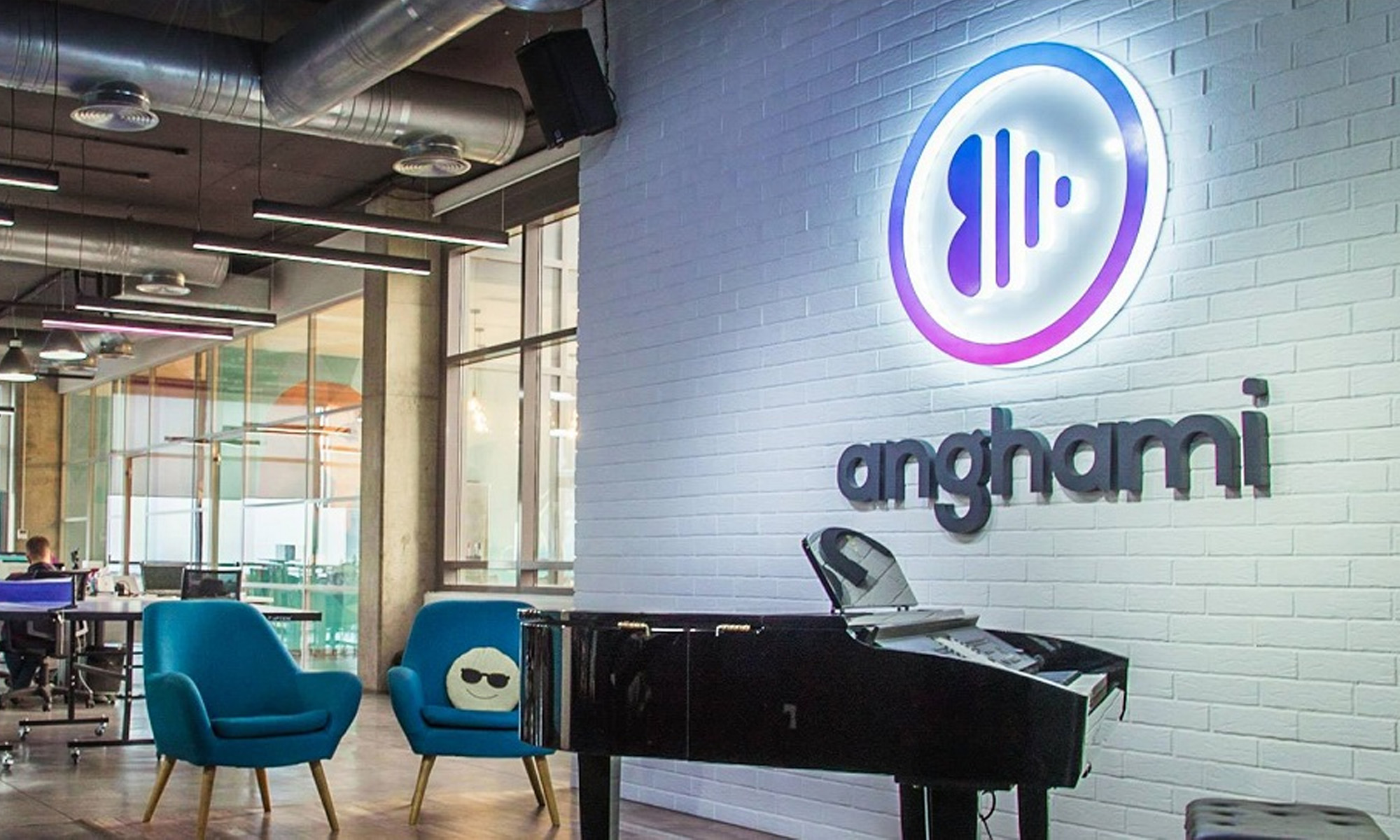
Anghami, the first music-streaming platform in the MENA region, will soon also become the first Arab technology company to list on NASDAQ New York via a merger with Vistas Media Acquisition Company Inc., a publicly-traded special purpose acquisition company.
“Today, we have taken a significant step forward in our growth plans in seeking to become the region’s first Arab technology company to list on Nasdaq,” said Anghami co-founder Eddy Maroun. “Being a US-listed public company gives us access to growth capital and a global platform that is the best in the world.”
Anghami, which translates into “my tunes” in Arabic, was founded in 2012 by Maroun and his fellow Lebanese entrepreneur Elie Habib, providing convenient access to Arabic and international music alike. Over the years, the platform has become the leader in the MENA region, offering around 60 million songs to more than 70 million registered users.
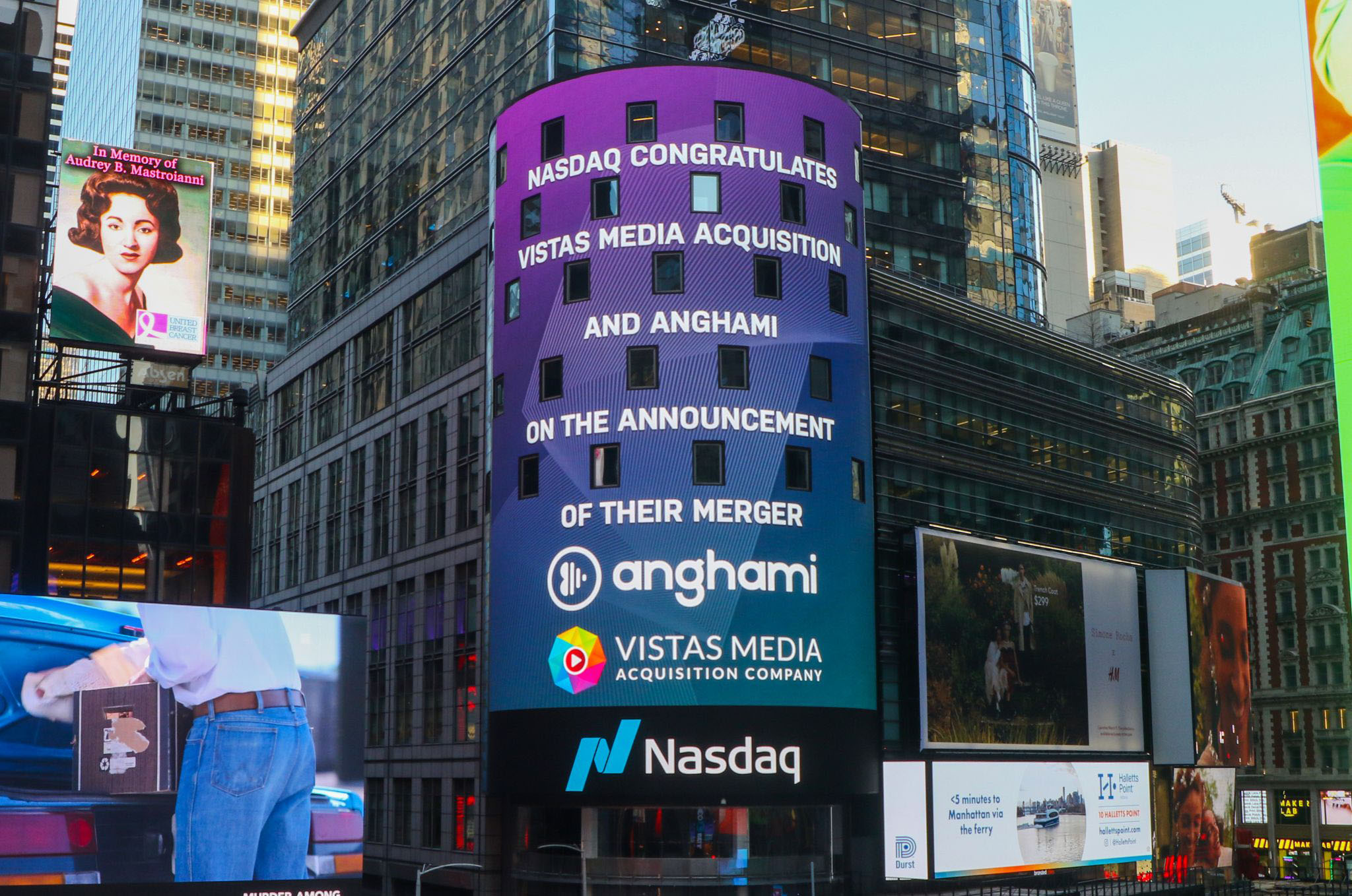
In early 2021, Anghami moved its headquarters to Abu Dhabi, after a partnership with the Abu Dhabi Investment Office. The merger with Vistas Media Acquisition Company Inc. implies an initial pro-forma valuation of around $220 million. The music-streaming platform will continue to operate under its name and trade under the symbol “ANGH”.
Also Read: Anghami Review: The MENA’s Favorite Music Streaming Service
“This is a landmark transaction for the MENA region and for Vistas,” commented Saurabh Gupta, co-founder of Vistas Media Acquisition Company Inc. “The combination of Anghami and the Vistas team will be a powerful force in the media and entertainment world, and we couldn’t be prouder of the hard work from everyone to get to this stage, but our work has only just begun.”
Anghami founders would like to use the new funding to not only attract additional customers from the MENA region, but they would also like to expand into new markets and compete with services like Spotify and Deezer, both of which are significantly more popular outside the Middle East.





News
At I/O 2026, Sundar Pichai Concedes AI Must Deliver Real Value
Gemini 3.5, a personal agent called Spark, agentic shopping, and Android XR eyewear are all aimed at making AI feel useful, not just impressive.

Google’s annual I/O developer conference (I/O 2026) has recently become a status update on the same question: can the company turn its AI spending into products people use every day? This year, chief executive Sundar Pichai described Google as being in a phase of hyper progress, while conceding this is the part of the cycle where people want to see real value in the products they use on a day-to-day basis.
The strategy on display was to push agents — AI systems that act on a user’s behalf — into nearly every Google product at once. Search now has an “intelligent search box” that returns generated explainer videos alongside links. Gmail, Docs, YouTube and Maps are gaining their own agent layers, including a Docs Live feature that turns spoken instructions into drafted text with citations.
Two new models, Gemini 3.5 and a cheaper Gemini 3.5 Flash, arrived the same day. Google says 900 million people now use Gemini, and that more than 50 billion images have been generated with it. The pricing tier names are likely to confuse buyers: a new AI Ultra plan launches at $100 a month, while the older Gemini AI Ultra drops from $250 to $200.
The flashier announcements were Gemini Omni, a video generator pitched as a more realistic answer to OpenAI’s discontinued Sora 2, and Gemini Spark, a personal agent that handles recurring tasks across a user’s Google account. A new universal shopping cart lets agents complete purchases across multiple retailers from inside Google itself, placing the company between the merchant and the buyer, and also owning the checkout.
Also Read: DJI Teases Dual-Camera Osmo Pocket 4P For 2026 Launch
Google also confirmed its Android XR eyewear, built with Samsung and frames from Warby Parker and Gentle Monster. Audio-only glasses ship this autumn; a display-equipped version, which would superimpose live translations into the wearer’s field of view, is still in development. Both sets translate, however only the display version shows you the result.
What Pichai did not resolve is the bargain underneath all this. An agent is only useful to the degree it knows your calendar, your inbox, your shopping history and your physical surroundings. Google has now confirmed that, in time, the same context may carry advertising.

2026 Crypto Trends: Bitcoin, ETFs & The Future Of Payments

At I/O 2026, Sundar Pichai Concedes AI Must Deliver Real Value

DJI Teases Dual-Camera Osmo Pocket 4P For 2026 Launch

Lebanon Ministers Meet Visa Over National Digital Payment Platform

AltoVolo Releases Sigma Footage & Sets Date For Demonstrator
AltoVolo Releases Sigma Footage & Sets Date For Demonstrator

NVIDIA Puts GPT-5.5 Codex In Hands Of 10,000 Staff

United Arab Emirates To Quit OPEC After 59 Years

YouTube Tests Conversational AI Search Tool