
News
Mobile App Helps Turkish Women Fight Domestic Violence
The app has so far been downloaded over 20,000 times, and more than 30 women have used it to seek help.


It’s estimated that 1 in 4 women globally have experienced severe domestic violence in their lifetime. For a number of complex reasons, the prevalence of domestic violence is especially high in the Eastern Mediterranean region.
Now, the Turkish Ministry of Interior is trying to use modern technology to help women threatened with domestic violence find help before it’s too late. The government ministry office released an app called KADES (Turkish acronym for Emergency Support Hotline for Women), which makes it easy for women to discretely report potential threats to the police.
“This application seeks to ensure women reach our police forces and receive help when under any threat, with just one touch,” explained Interior Minister Süleyman Soylu. “In any dangerous situation, women can connect to the system at the touch of a button, which will automatically send details of their location to the police”.
According to government statistics, the app has so far been downloaded over 20,000 times, and more than 30 women have used it to seek help. On average, the police arrived in just 5 minutes. The number is so low because the app automatically determines where the distressed woman is located and makes the information available to the police.
Also Read: Reddit Plans To Convert Its Karma Points To ERC-20 Tokens
The Turkish Ministry of Interior would like to see initiatives like KADES help wipe out violence against women completely. “Our President [Recep Tayyip Erdoğan] says ‘abuse and violence on women is the biggest crime inflicted upon humanity’. We will continue our efforts until this shame is completely wiped out of our country,” said the minister.
However, government officials in Turkey are well aware that achieving such a lofty goal is extremely difficult and will require a multi-pronged approach, as well as a lot of time. In October 2021 alone, 18 women were killed across Turkey, and the number of less serious incidents is impossible to calculate because many of them go unreported.







News
Abu Dhabi’s Robot Kitchen Is Serving Up Biryani, Not Burgers
Circus SE wants to put a tiny automated factory inside the buildings where Gulf residents live and work, bypassing part of last-mile delivery.


The most telling thing about a new autonomous kitchen now running in Abu Dhabi’s Marina Square is what it won’t cook:
“We don’t do fast food,” says Nikolas Bullwinkel, Founder and CEO of Circus SE. “We’ve actively decided not to build a machine that can only do burgers”.
Instead, the CA-1 system is built around pot-based cooking: curries, pastas, soups and rice dishes. After experimenting with highly personalized recipes, Circus deliberately leaned back toward recognizable food. “We’re going with a chicken biryani because you know it,” Bullwinkel says of the AED 40 dish.
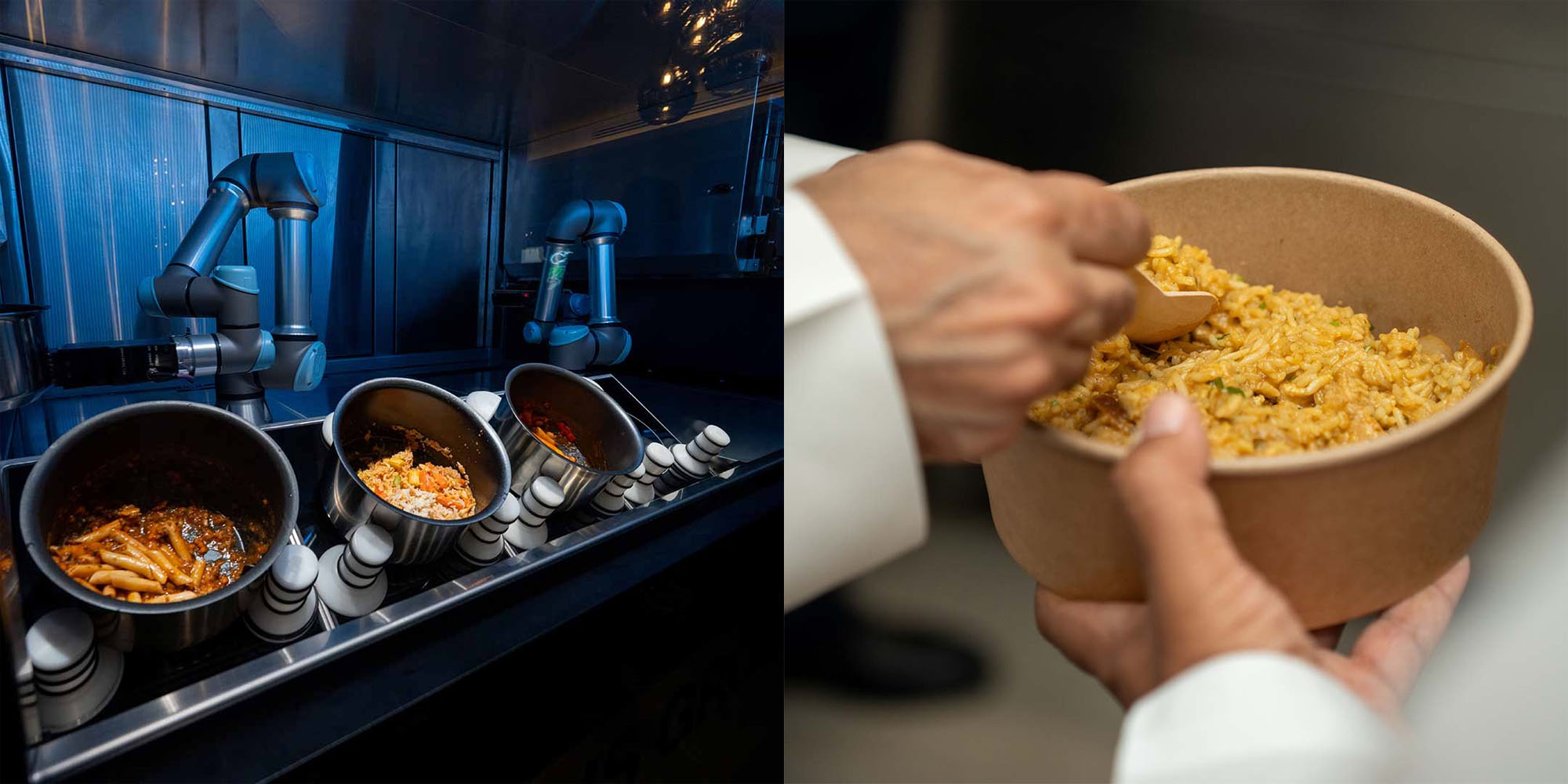
The Germany-based robotics and food technology company operates across eight countries, and Abu Dhabi is its first deployment outside Europe. More locations are expected there and in Dubai.
In Germany, its units can be placed in supermarkets, gas stations, airports and hospitals. In the Gulf, Bullwinkel wants them inside residential and office buildings, replacing some of the complexity of last-mile delivery. “We’re basically bringing a very tiny factory a few square meters into your building,” he says. Catering company Royal Prestige supplies the ingredients and knowledge of local tastes.
The CA-1 manages up to 36 refrigerated ingredient silos alongside automated induction cooking, robotic plating and a self-cleaning dishwasher. Two robotic arms move ingredients through the system with minimal human intervention. It can produce up to 120 hot meals an hour, and a meal such as rice and curry can take around three to four minutes.
Also Read: Ooredoo Qatar’s 5G+ Network Is Built For Machines As Much As People
Five cameras and multiple sensors monitor heat, temperature and consistency, an attempt to approximate what a chef perceives. “You can hear something gets burned, you can smell it, you can see it at some point,” Bullwinkel says. CircusOS, the company’s operating system, adjusts recipes in real time.
You might think of the platform as a threat to kitchen staff, but Bullwinkel frames Circus as a way for chefs to develop recipes and distribute them at scale. With that being said, rising labor costs and shortages are also part of his case for automation.

Abu Dhabi’s Robot Kitchen Is Serving Up Biryani, Not Burgers

Sennheiser’s MOMENTUM 5 Series Bets On Batteries You Can Swap

UAE’s 3-Minute University Registration Runs On Government Data

How Online Ads Became A Delivery System For Zero-Click Spyware

Shokz OpenDots 2 Review: Clip-On Audio Gets A Bass-Heavy Makeover

Dubai Says Its Deepfake Detector Needs Just 7 Seconds Of Video

New Disney+ Streaming App Has Officially Launched In The UAE

NEOPAY Wants To Follow Merchants Across Channels And Borders

RØDE’s Low-Profile Studio Arm Is Designed To Stay Out Of Shot

G42’s Inception42 Wants AI To Show Its Work Before Investors Commit


-
 News3 weeks ago
Dubai Says Its Deepfake Detector Needs Just 7 Seconds Of Video
-
 News2 weeks ago
New Disney+ Streaming App Has Officially Launched In The UAE
-
 News3 weeks ago
NEOPAY Wants To Follow Merchants Across Channels And Borders
-
 News3 weeks ago
RØDE’s Low-Profile Studio Arm Is Designed To Stay Out Of Shot