
News
SpyBuster Helps Identify iOS Apps With Servers In Russia And Belarus
When you launch SpyBuster, it automatically begins examining installed apps, looking for connections with Russia or Belarus.


Soon after Russia invaded Ukraine last February, the number of cyber attacks launched against both countries surged. Because targeted attacks against specific government entities are what usually makes the headlines, it’s easy to overlook the role we all play in today’s cyber warfare.
As we use our beloved iPhones to help us navigate our daily lives, we rely on a large number of apps, many of which send potentially sensitive information to remote servers. That’s usually not a problem except when the servers that the app is communicating with are located in Russia or Belarus, and the iOS version of SpyBuster by MacPaw is here to help you discover all apps on your device that do just that.
“In 2016, Russia adopted legislation that requires telecom providers to store private user data, including the content of voice calls, images, and text messages, for 6 months. It also orders them to retain metadata like sender and recipient information, sending time, and location, for 3 years,” explains Eugene Kalnyk, PR Specialist at MacPaw. “The so-called Yarovaya Law allows FSB and other Russian law enforcement agencies nearly unlimited access to any user data on Russian servers without a court order.”
SpyBuster debuted in March 2022 as a macOS privacy tool. It took MacPaw only three months to release it as a Chrome extension. With the recent release of the iOS version, users can finally protect their privacy everywhere — from desktop computers and laptops to the web to mobile devices.
Just like CleanMyMac X and other software applications developed by MacPaw, SpyBuster is designed to be user-friendly, and it shows through and through.
Also Read: DDoS Attacks Are A Growing Threat In Gaming
When you launch SpyBuster, it automatically begins examining installed apps, looking for connections with Russia or Belarus. It then presents a list of suspicious apps, allowing you to see at a glance why the apps should be avoided. Less experienced users may also appreciate the inclusion of detailed uninstall instructions.
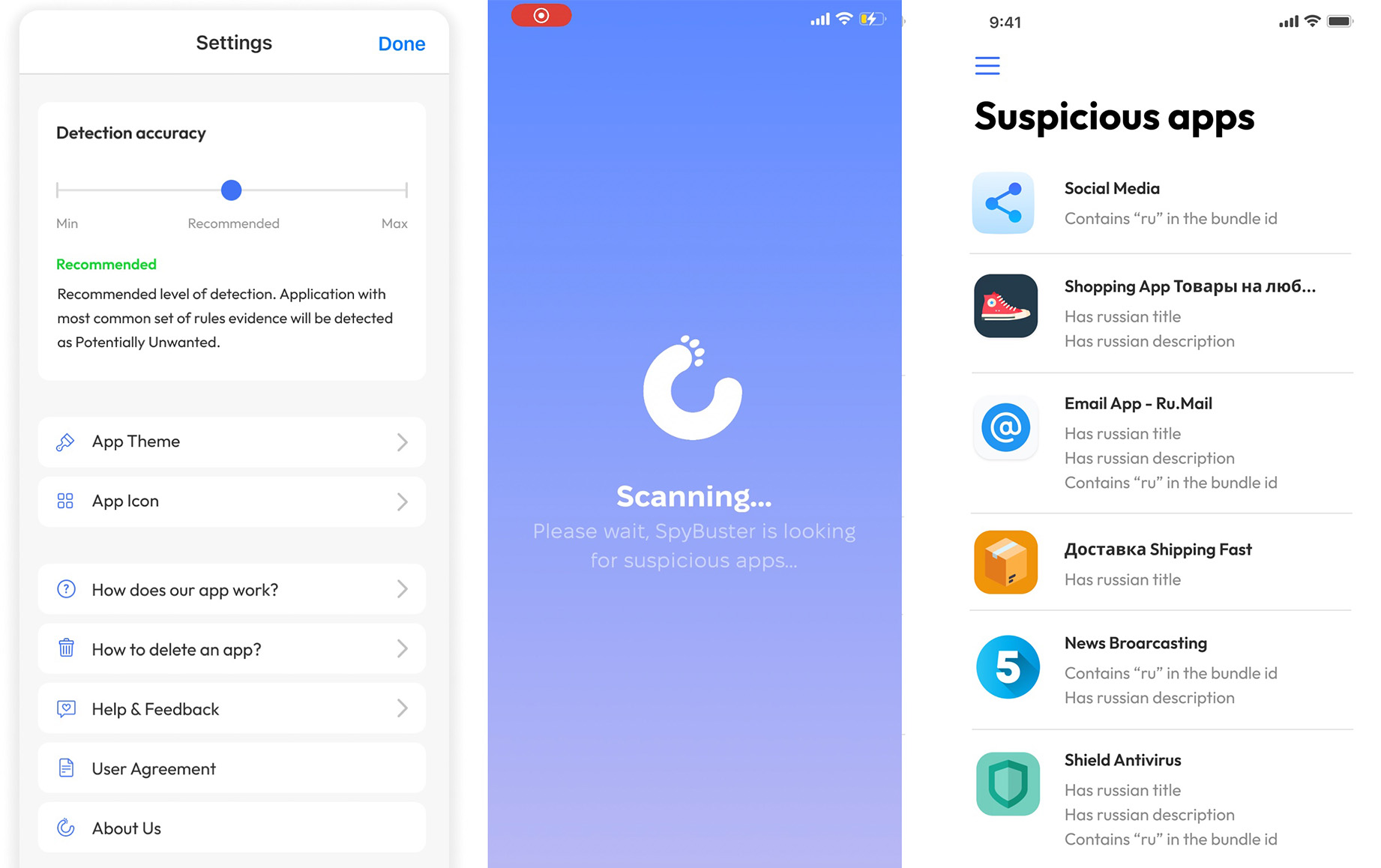
The settings section of the SpyBuster app lets you adjust your detection accuracy setting, which influences how many privacy offenses an app has to commit before being flagged as suspicious.
To learn more about SpyBuster, visit its official website, where you can find download links for iOS, macOS, and Chrome.



News
Nano Banana 2 Arrives In MENA For Google Gemini Users
Google brings its latest image model to Gemini and Search, adding 4K output and tighter text control for regional users.


Google has opened access to Nano Banana 2 across the Middle East and North Africa, pushing its newest image model into everyday tools rather than keeping it inside the exclusive (and expensive) Pro tier.
The rollout spans the Google Gemini desktop and mobile apps, and extends to Google Search through Lens and AI Mode. Developers can also test it in preview via AI Studio and the Gemini API.
Nano Banana 2 runs on Gemini Flash, Google’s fast inference layer. The focus is speed, but also control. Users can export visuals from 512px up to 4K, adjusting aspect ratios for everything from vertical social posts to widescreen displays.
The model maintains character likeness across up to five figures and preserves fidelity for as many as 14 objects within a single workflow. This enables visual continuity across scenes, iterations, or edits — supporting projects like short films, storyboards, and multi-scene narratives. Text rendering has also been improved, delivering legible typography in mockups and greeting cards, with built-in translation and localization directly within images.
Also Read: RØDE Adds Direct iPhone Pairing To Wireless GO And Pro Mics
Under the hood, the system taps Gemini’s broader knowledge base and pulls in real-time information and imagery from web search to render specific subjects more accurately. Lighting and fine detail have been upgraded, without slowing output.
By embedding the model inside Gemini and Search, Google is normalizing advanced image generation for a mass audience. In MENA, where startups and marketing teams are leaning heavily on AI to scale content across languages and borders, that shift lands at a practical moment.
The move also folds creative tooling deeper into search itself, so that image generation is no longer a separate workflow. It now sits right next to the query box.

Nano Banana 2 Arrives In MENA For Google Gemini Users

GluCare Rebrands To Metabolic, Dropping Diabetes-Only Identity

Apple’s March 4 Event Rumored To Put New Macs In Play

Google Adds Arabic AI Music Creation For Ramadan


