
News
Tarabut Gateway & Visa Aim To Redefine Open Banking In MENA
The partnership will merge the capabilities of both companies as they plan innovative new solutions for the MENA region.


Tarabut Gateway, the MENA region’s leading Open Banking platform, has announced a new strategic partnership with global payment leader Visa.
The companies will use their extensive Open Banking experience to collaborate on new products and solutions, such as credit risk assessments and lending, cross-border payments, and advanced analytical tools.
Tarabut Gateway currently offers various API-based solutions enabling banks, merchants, and fintech startups to build financial apps. Meanwhile, the company’s extensive Open Banking infrastructure continues to expand across Saudi Arabia, the UAE, and Bahrain.

The new partnership with Visa aims to enhance customer experiences and foster innovation across the region. It comes after Tarabut Gateway’s recent 32 million USD investment drive, in which Visa was a key participant.
Visa’s investment in Tarabut Gateway follows its recent acquisition of leading Open Banking platform Tink and represents part of a broader MENA strategy.
Abdulla Almoayed, Founder and CEO of Tarabut Gateway, explained his excitement about the collaboration:
“Our existing close relationship, through Visa’s investment in Tarabut Gateway, has paved the way for this collaboration. The progress of open banking in the Middle East in recent years has been remarkable [and] together with Visa, we will leverage our data infrastructure to bring new and improved products to customers”.
Also Read: A Guide To Digital Payment Methods In The Middle East
Meanwhile, Otto Williams, Senior Vice-President and Head of Product, Partnerships, and Digital Solutions for Visa Central and Eastern Europe, Middle East, and Africa, noted:
“The future of financial services is being shaped by next-gen digital innovation, with Open Banking and data sharing serving as a significant driver to help consumers better manage and access their finances. Our shared commitment to next-generation solutions will enable us to transform the financial landscape and offer cutting-edge services to our customers”.





News
G42’s Inception42 Wants AI To Show Its Work Before Investors Commit
Launched at SuperReturn Middle East, Alpha is pitched at sovereign wealth funds and private equity firms underwriting bigger deals on tighter timelines.
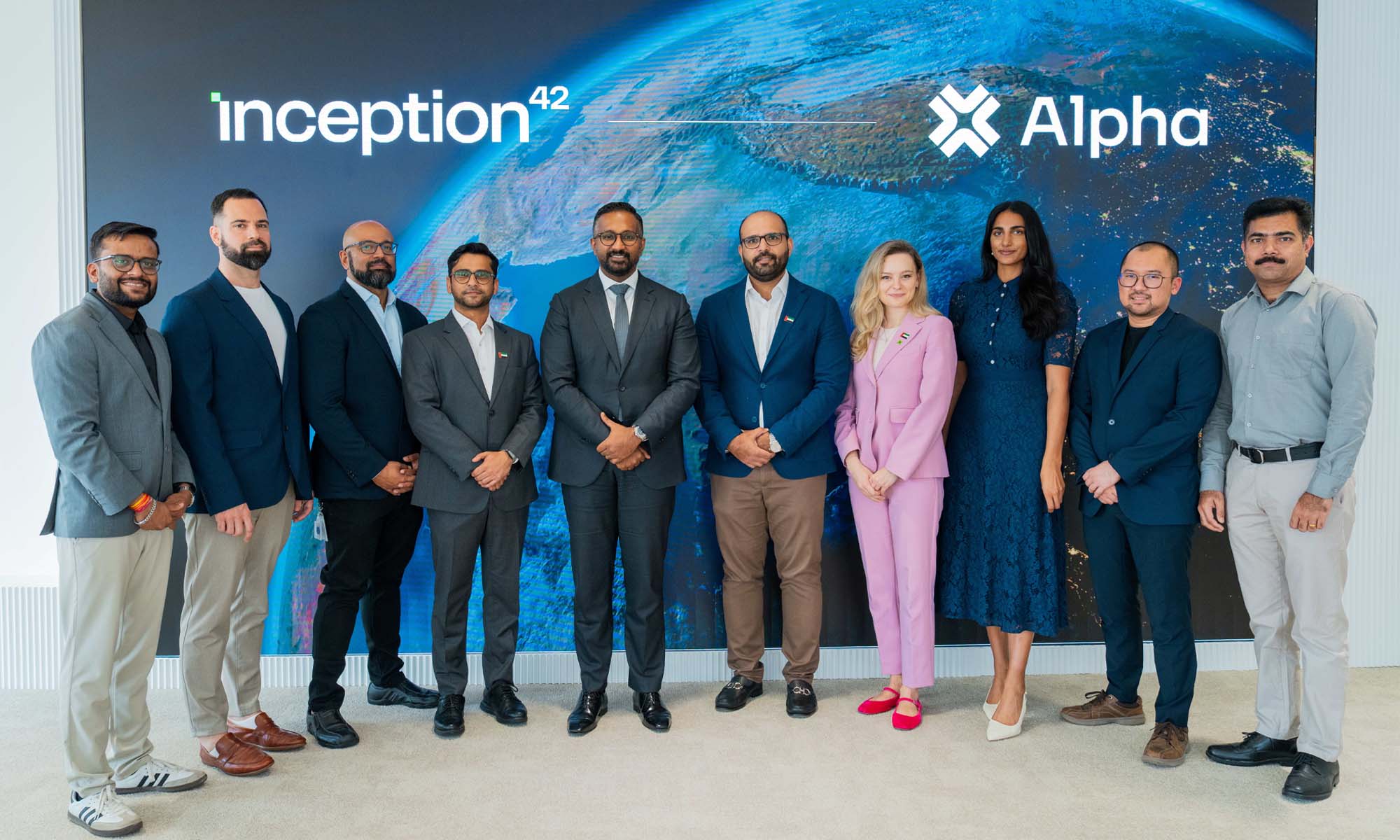
Inception42, G42’s agentic AI company, believes that institutional investors want AI they can check, not just AI that saves time. Its new tool, Alpha, launched at SuperReturn Middle East, is designed to draft investment memos in which every claim points back to its source.
Alpha is aimed at private equity firms, sovereign wealth funds and institutional allocators, which Inception42 says are underwriting larger, more complex positions under tighter timelines. Most AI tools, it argues, speed up individual tasks such as a memo draft or a comps table but leave the investment strategy scattered across files, inboxes and committee decks.
Teams upload Confidential Information Memoranda, diligence packs and portfolio data, which Alpha turns into insights grounded in that material. It checks how complete the diligence is, flagging gaps before they become late-stage surprises, then scores the deal against criteria the institution sets and drafts the memo.
Sourcing every claim is the core of Inception42’s Alpha pitch. Investment committees, the company says, have little time to challenge the evidence, and the audit trail is meant to give them more certainty. The company also promises institutions proof that their own strategy was applied consistently on every deal.
Also Read: Dubai Says Its Deepfake Detector Needs Just 7 Seconds Of Video
“Every investment committee wants the same thing: the full picture of a deal and the confidence to act on it,” says Ashish Koshy, CEO of Inception42. “Alpha gives deal teams and committee members that picture, with every insight traceable to its source, so speed and rigor finally pull in the same direction”.
Alpha is available as SaaS, and investment data, Inception42 says, stays under the institution’s control at every step. Firms can tailor the tool with custom agents, and Alpha Skills will eventually add reusable, practitioner-designed workflows for tasks such as comparables analysis and credit assessment.
The company says Alpha is already proven in the region’s most significant financial institutions. If the tool works as described, committees get an investment memo they can interrogate rather than simply take on trust.

Shokz OpenDots 2 Review: Clip-On Audio Gets A Bass-Heavy Makeover

G42’s Inception42 Wants AI To Show Its Work Before Investors Commit

WHOOP Goes Arabic, Betting On The Gulf’s Appetite For Health Data

New Disney+ Streaming App Has Officially Launched In The UAE

Dubai Says Its Deepfake Detector Needs Just 7 Seconds Of Video

In Kuwait, Your Surgeon Might Be Operating From Another Country

Microsoft Plans $10 Billion-Plus Gulf Expansion Despite Iran Conflict

Qatar Folds 45 State Companies Into A Single Investment Platform

NEOPAY Wants To Follow Merchants Across Channels And Borders

RØDE’s Low-Profile Studio Arm Is Designed To Stay Out Of Shot


-
 News3 weeks ago
In Kuwait, Your Surgeon Might Be Operating From Another Country
-
 News3 weeks ago
Microsoft Plans $10 Billion-Plus Gulf Expansion Despite Iran Conflict
-
 News3 weeks ago
Qatar Folds 45 State Companies Into A Single Investment Platform
-
 News2 weeks ago
NEOPAY Wants To Follow Merchants Across Channels And Borders