
News
Meet Raha: The Next-Generation Grocery Experience
One important aspect of our daily lives that has yet to fully benefit from the latest technological innovations is grocery shopping, and Raha wants to change that.

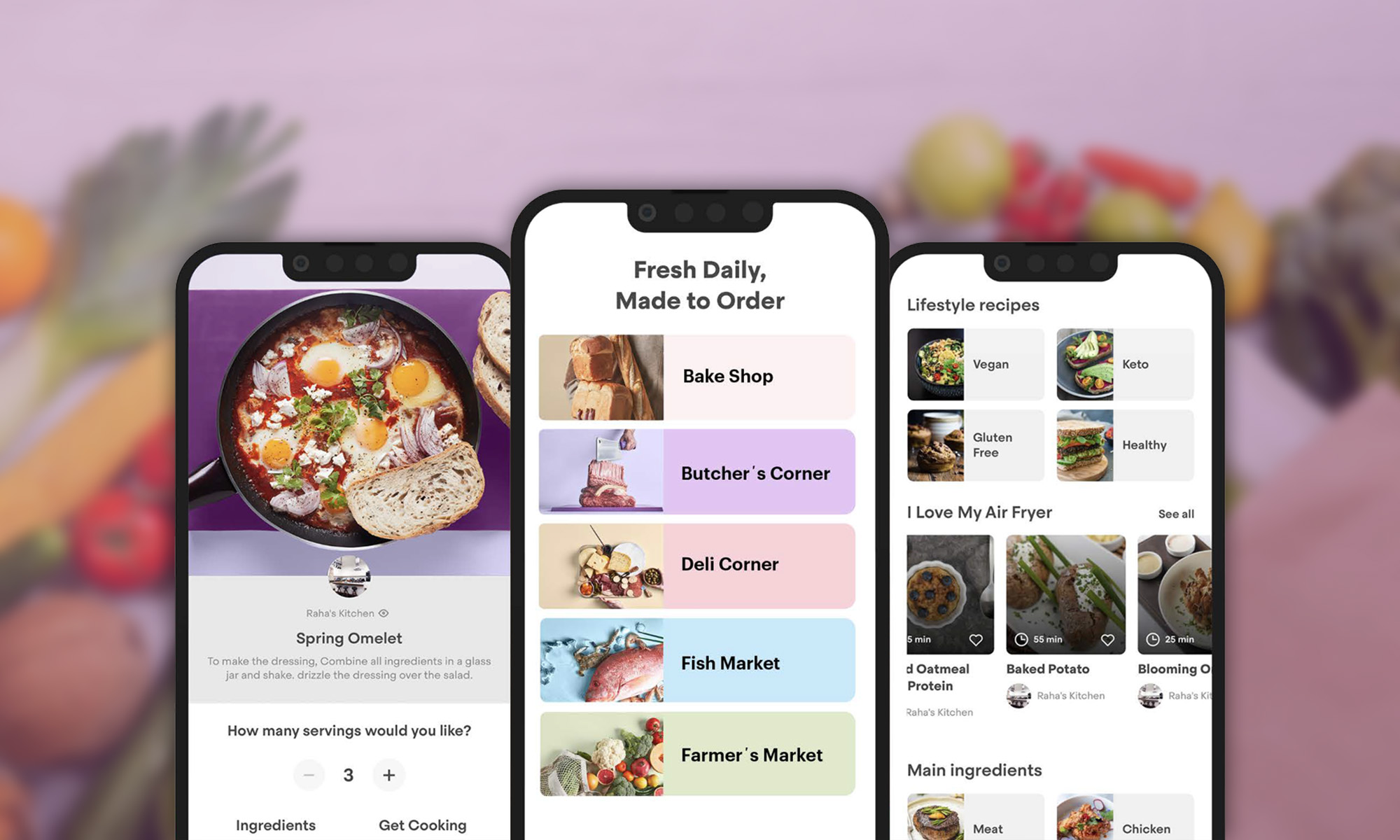
Modern technology has redefined many aspects of our daily lives. We’re now used to receiving personalized music recommendations based on our listening habits, seeing curated content on social media feeds, and accomplishing many tasks that used to take a lot of time and effort with a simple click. One important aspect of our daily lives that has yet to fully benefit from the latest technological innovations is grocery shopping, and Raha wants to change that.
What Is Raha?
Raha is an e-grocery platform and digital shopping destination whose goal is to redefine the grocery experience to meet the complex needs of today’s savvy shoppers.
If you’re like most shoppers, then you start your average trip to the grocery store with only a rough idea of what you want to buy based on the meals you want to cook, the items that are currently on sale, and your regular shopping habits.
As you walk from one aisle to another, you may discover that some items are not in stock or fail to notice a large discount on something you routinely buy. You then have to wait in a checkout line or go through the whole self-service ordeal.
The team of passionate business minds, retail gurus, data wizards, and operational masterminds behind Raha are convinced that what we’ve just described doesn’t have to be the default grocery shopping experience for most people.
Instead, they want to take all the inconveniences out of grocery shopping by offering a full range of groceries, fresh produce, and household essentials through a data-driven online experience.
What Makes Raha Different?
Online grocery shopping isn’t a new thing, but most shoppers still prefer the traditional experience because online grocery shopping platforms tend to be cumbersome to use and sometimes even unable to deliver all the items shoppers are used to buying.
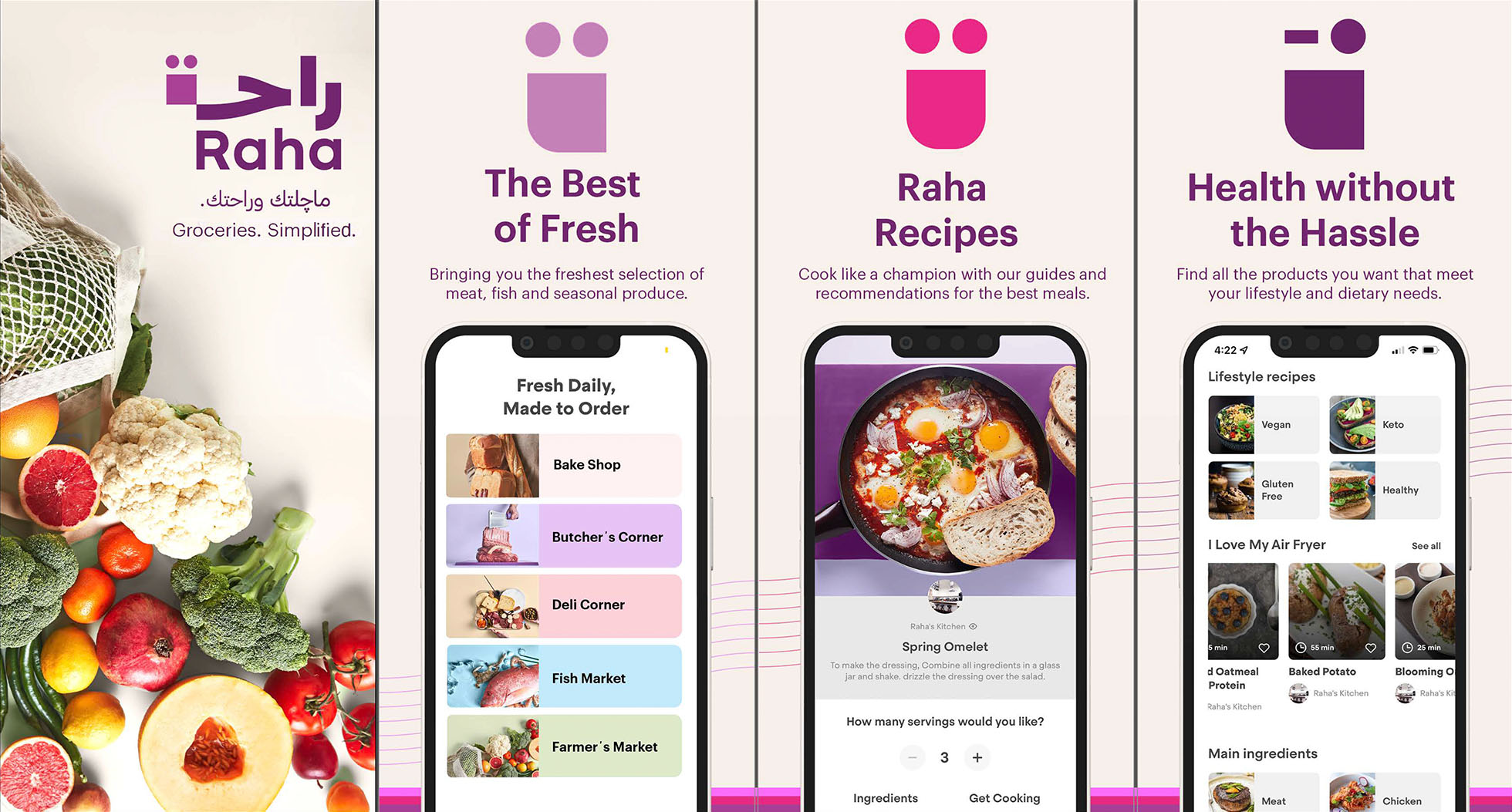
To stand out from the crowd, Raha has been designed to provide the most satisfying customer journey possible. The platform is:
- Easy To Navigate: Raha believes that online grocery shopping should be intuitive and fun. That’s why they’ve streamlined and optimized their platform for the user’s optimal convenience, making it as easy to navigate as the plethora of online services we all enjoy every day.
- Intelligent: Physical grocery stores can’t dynamically change their layout and items to adjust to the individual requirements and dietary preferences of each shopper, but Raha can, delivering a made-to-fit experience for everyone.
- Personalized: Made-to-order items, step-by-step customization, and an impressively wide range of product varieties are just three examples of how Raha delivers the most personalized grocery shopping experience today.
- Comprehensive: Raha strives to be the only destination for your grocery shopping needs, offering the widest assortment of products in the market, including fresh produce, bread and bakery, fresh meats, dairy, snacks, household essentials, beverages, frozen foods, baby products, and more.
- Always Fresh: To ensure maximum freshness, Raha operates the first fully-automated robotics–fulfillment center in Kuwait, employing a temperature-controlled process capable of achieving quality benchmarks across every order. It also has an in-house fleet and a last-mile delivery solution that optimizes routes and timings.
Since the purpose of grocery shopping is to turn food items into delicious meals, the Raha platform offers a broad selection of professionally curated recipes.
All Raha Recipes come with instructional videos that provide detailed step-by-step instructions that even inexperienced home cooks can easily follow. Best of all, adding all ingredients for a recipe you want to cook to your shopping cart is as easy as clicking the corresponding button.
What’s To Come For Raha?

Upgrading the grocery experience to better meet the needs of current and future shoppers alike is no easy task, but the team behind Raha seems to be on the right track.
During its seed round of funding – led by Saudi’s Aujan Investments, Kuwait’s NOX Management and London-based Cedar Mundi Ventures – Raha was able to secure a US$ 7 million investment, enabling it to establish itself as the region’s first fully automated e-grocery pure-play platform.
The only question that remains to be answered now is whether shoppers in the MENA region are ready to say goodbye to physical grocery stores. Based on how the world has changed over the last two years, we think it’s safe to say that they are not just ready but already looking forward to it.
Raha has apps for both Android as well as iOS, and can also be found on Twitter, LinkedIn, and Instagram.






News
Abu Dhabi’s Robot Kitchen Is Serving Up Biryani, Not Burgers
Circus SE wants to put a tiny automated factory inside the buildings where Gulf residents live and work, bypassing part of last-mile delivery.

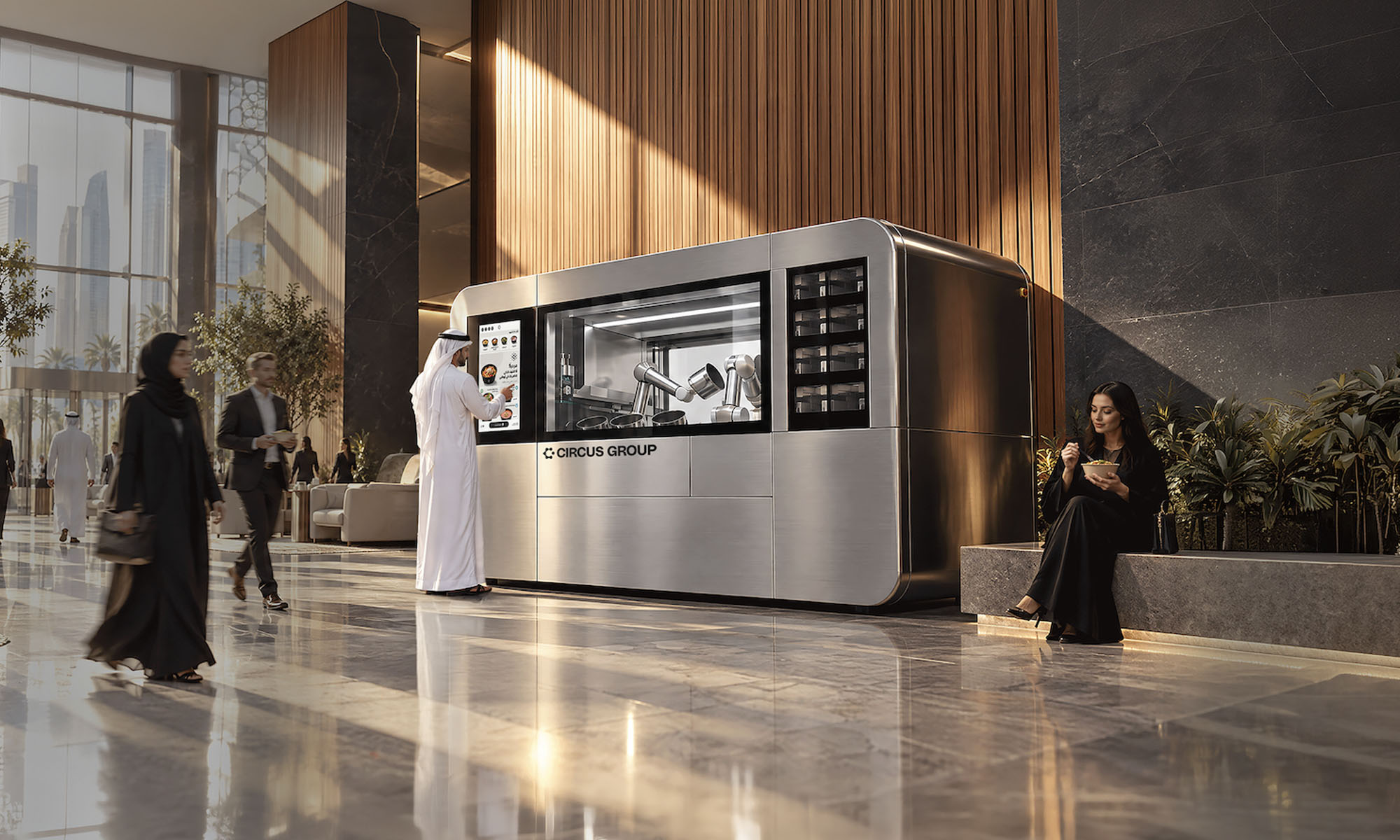
The most telling thing about a new autonomous kitchen now running in Abu Dhabi’s Marina Square is what it won’t cook:
“We don’t do fast food,” says Nikolas Bullwinkel, Founder and CEO of Circus SE. “We’ve actively decided not to build a machine that can only do burgers”.
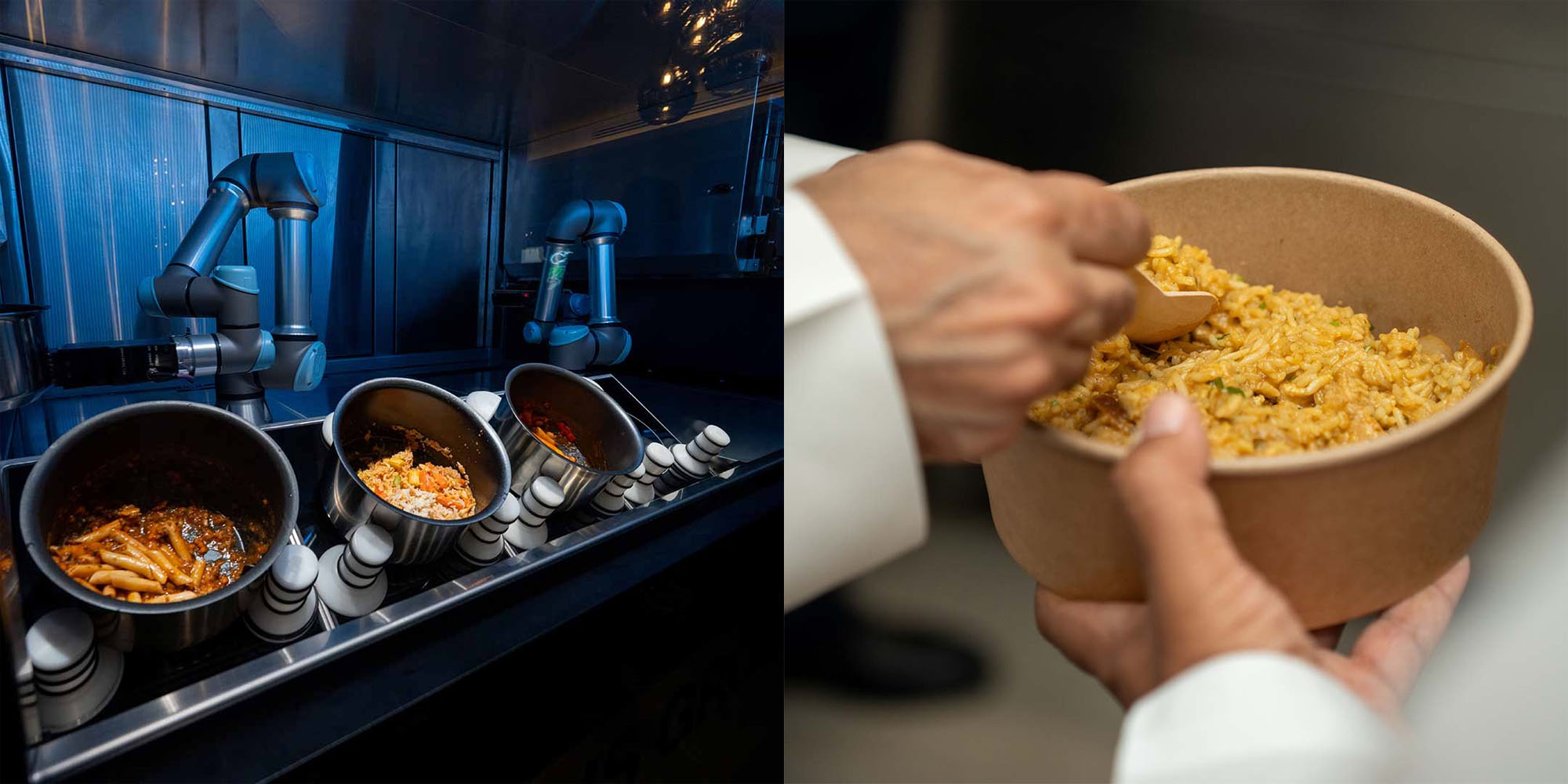
Instead, the CA-1 system is built around pot-based cooking: curries, pastas, soups and rice dishes. After experimenting with highly personalized recipes, Circus deliberately leaned back toward recognizable food. “We’re going with a chicken biryani because you know it,” Bullwinkel says of the AED 40 dish.
The Germany-based robotics and food technology company operates across eight countries, and Abu Dhabi is its first deployment outside Europe. More locations are expected there and in Dubai.
In Germany, its units can be placed in supermarkets, gas stations, airports and hospitals. In the Gulf, Bullwinkel wants them inside residential and office buildings, replacing some of the complexity of last-mile delivery. “We’re basically bringing a very tiny factory a few square meters into your building,” he says. Catering company Royal Prestige supplies the ingredients and knowledge of local tastes.
The CA-1 manages up to 36 refrigerated ingredient silos alongside automated induction cooking, robotic plating and a self-cleaning dishwasher. Two robotic arms move ingredients through the system with minimal human intervention. It can produce up to 120 hot meals an hour, and a meal such as rice and curry can take around three to four minutes.
Also Read: Ooredoo Qatar’s 5G+ Network Is Built For Machines As Much As People
Five cameras and multiple sensors monitor heat, temperature and consistency, an attempt to approximate what a chef perceives. “You can hear something gets burned, you can smell it, you can see it at some point,” Bullwinkel says. CircusOS, the company’s operating system, adjusts recipes in real time.
You might think of the platform as a threat to kitchen staff, but Bullwinkel frames Circus as a way for chefs to develop recipes and distribute them at scale. With that being said, rising labor costs and shortages are also part of his case for automation.

Abu Dhabi’s Robot Kitchen Is Serving Up Biryani, Not Burgers

Sennheiser’s MOMENTUM 5 Series Bets On Batteries You Can Swap

UAE’s 3-Minute University Registration Runs On Government Data

How Online Ads Became A Delivery System For Zero-Click Spyware

Shokz OpenDots 2 Review: Clip-On Audio Gets A Bass-Heavy Makeover

Dubai Says Its Deepfake Detector Needs Just 7 Seconds Of Video

New Disney+ Streaming App Has Officially Launched In The UAE

NEOPAY Wants To Follow Merchants Across Channels And Borders

RØDE’s Low-Profile Studio Arm Is Designed To Stay Out Of Shot

G42’s Inception42 Wants AI To Show Its Work Before Investors Commit


-
 News3 weeks ago
Dubai Says Its Deepfake Detector Needs Just 7 Seconds Of Video
-
 News3 weeks ago
New Disney+ Streaming App Has Officially Launched In The UAE
-
 News3 weeks ago
NEOPAY Wants To Follow Merchants Across Channels And Borders
-
 News4 weeks ago
RØDE’s Low-Profile Studio Arm Is Designed To Stay Out Of Shot