News
Saudi Arabia Aims For 70% Cashless Transactions By 2025
The number of fintech firms in the MENA region skyrocketed from just 10 in 2018 to a substantial 147 in 2022.


In the MENA region, fintech investments surged from $200 million in 2020 to around $704 million in 2023.
Saudi Arabia, driven by its ambitious Vision 2030 blueprint and a youthful population, has seen remarkable fintech growth. So much so that the Kingdom is now aiming for 70% of domestic payments to be digital by 2025, according to Philip Drury of CitiGroup.
Drury, speaking at the 3rd Saudi Capital Market Forum, noted the rise of operational fintech firms from 10 in 2018 to 147 in 2022 and emphasized the need for businesses to adapt swiftly to regulatory advancements, pointing to the 30 digital and 3 digital banking licenses issued as clear evidence of sector growth.
The CitiGroup executive also highlighted opportunities for expanded market reach and inclusivity, stressing collaboration between traditional banks and fintech for mutual success.
Also Read: A Guide To Digital Payment Methods In The Middle East
The Saudi Capital Market Forum, under Finance Minister Mohammed Al Jadaan’s patronage, focused on “Powering Growth” and hosted over 54 speakers and 69 sponsors.
Nayef Al Athel, from Saudi Tadawul Group Holding Company, highlighted the event’s commitment to promoting market diversification. The forum also saw the introduction of Single Stock Options contracts on the Saudi National Bank, further developing the Kingdom’s financial markets.



News
Lebanon Ministers Meet Visa Over National Digital Payment Platform
Finance and technology ministers say a comparative study and roadmap will follow before any decision on adopting a model.


Lebanon’s finance and technology ministers met representatives from Visa last week to discuss a proposed unified national digital payment platform for government services, according to a readout from the Ministry of Finance.
The meeting brought together Finance Minister Yassin Jaber, Minister of State for Technology and Artificial Intelligence Kamal Shehadeh, a Visa delegation, and experts from both ministries. Discussion focused on whether Lebanon could establish a single platform through which citizens and institutions would pay taxes, fees, fines and other official transactions electronically, using mobile phones and other digital channels.
The Visa delegation presented examples from countries that have adopted unified government payment platforms, including the United Arab Emirates, Singapore, Estonia and Jordan. According to the readout, the examples were presented as having increased collection rates and expanded financial inclusion.
Talks covered settlement mechanisms, direct transfer to the treasury account, financial reconciliation, risk management, cybersecurity, fees, and an operational model that would involve the private sector. The parties agreed to continue technical and institutional consultations, prepare a comparative study, and develop an implementation roadmap before any decision on adopting a model for Lebanon.
Jaber said the Ministry of Finance had already enabled citizens to pay using credit cards and e-wallets through transfer companies, but described the proposed platform as a further step. He framed the development of electronic payment and collection systems as a priority within the ministry’s modernization plan.
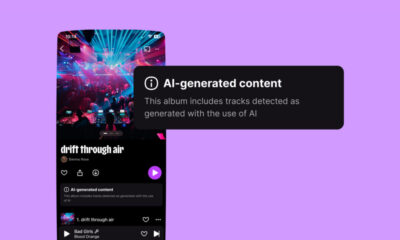
Also Read: Deezer Says AI Tracks Now Make Up 44% Of Uploads
Shehadeh outlined the citizen-facing concept as a single mobile application through which users could settle obligations to ministries, government institutions and other bodies.
“The idea, in short, is that any citizen downloads an application on their mobile phone, through which they can pay all service obligations for all ministries, government institutions, or those owned by the Lebanese state, and others as well, as the platform is not limited only to state institutions,” he said.
Shehadeh added that the platform would not displace banks and money transfer companies that currently provide collection services to the state, calling it complementary to their work.

Lebanon Ministers Meet Visa Over National Digital Payment Platform

AltoVolo Releases Sigma Footage & Sets Date For Demonstrator

Careem Launches Lebanon Aid Drive With WFP

United Arab Emirates To Quit OPEC After 59 Years

YouTube Tests Conversational AI Search Tool

Yango Ride Introduces In-Chat Trip Planning In ChatGPT

Deezer Says AI Tracks Now Make Up 44% Of Uploads

NVIDIA Puts GPT-5.5 Codex In Hands Of 10,000 Staff
United Arab Emirates To Quit OPEC After 59 Years