
News
Wisk Aero Unveils Four-Seat Autonomous Air Taxi
The Boeing-backed startup hopes that with FAA certification, it will soon be able to launch a viable air taxi service.

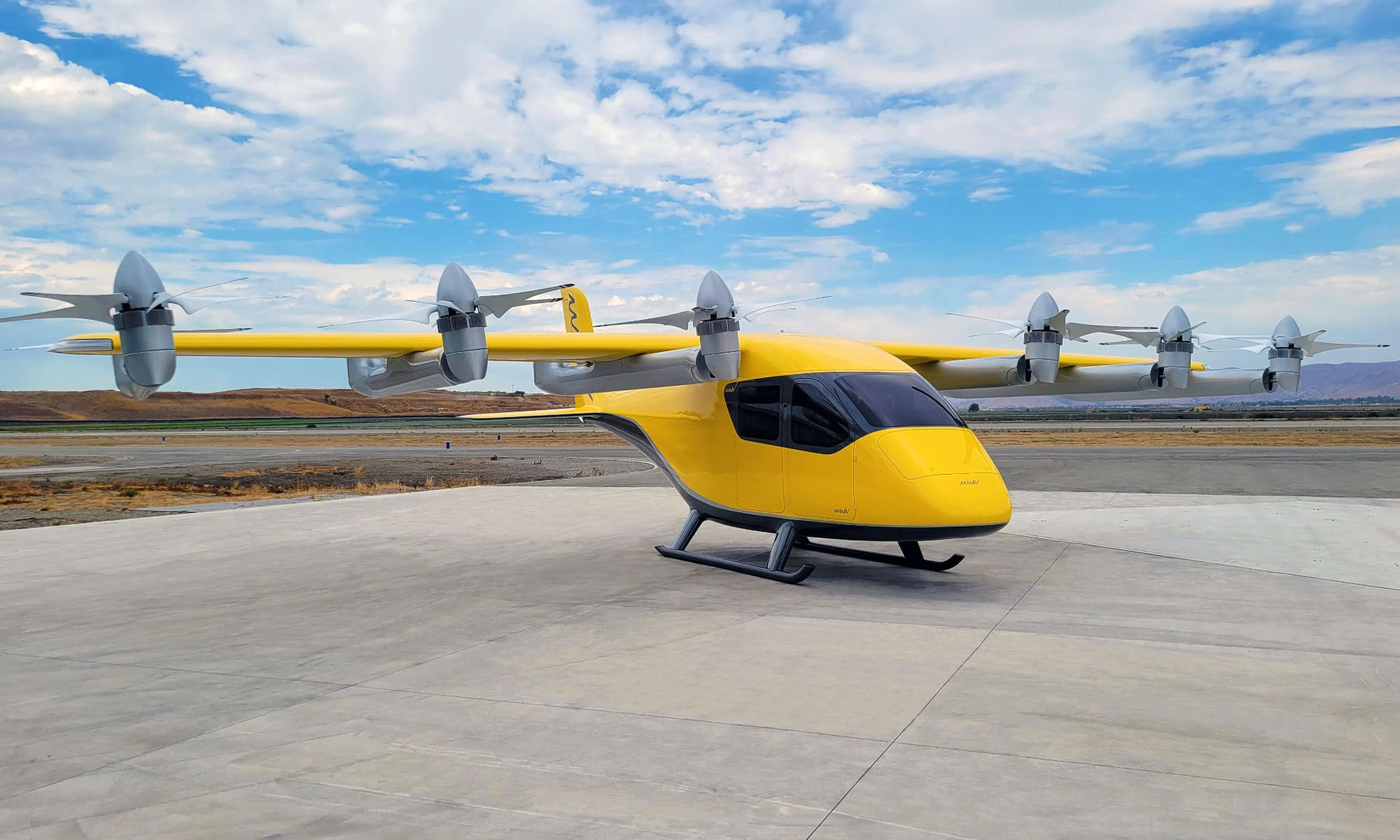
Wisk Aero may not yet be a household name, but the company has been around since 2019, and has just unveiled its 6th generation aircraft — a small electric 4-seat machine that can fly without any form of human intervention.
The company was originally a joint venture involving Boeing, and the now defunct flying taxi startup Kitty Hawk, initially funded by Google co-founder Larry Page. The Wisk plane is currently seeking FAA approval for passenger testing and will be the first ever electric vertical takeoff and landing (eVTOL) plane to receive certification.
Wisk’s latest design is unusual, featuring 6 five-bladed front rotors that can be tilted horizontally or vertically and the same arrangement at the rear (albeit two-bladed and fixed vertically). The plane has a cruising speed of 120 knots, combined with a 90-mile (140KM) range, and flies at a low altitude of 2.5 to 4 thousand feet.
So what does the future hold for Wisk’s autonomous air taxi? Eventually, the company hopes that clients will be able to hail the aircraft via a bespoke app, in a similar manner to an Uber. The plane will take off and land vertically, making it perfect for city applications, where it could easily launch and land from the rooftops of high-rise buildings.
Also Read: Airbus Has Revealed Its CityAirbus NextGen Flying Taxi
Weight remains a big issue for electric aircraft, due to the hefty mass of the batteries that need to be carried. Aviation fuel has a far better power-to-weight ratio than even the most modern lithium-ion batteries, so it remains tricky to make aircraft like Wisk’s viable. Wisk Aero has made encouraging progress so far and maintains the ambitious goal of carrying out 14 million taxi journeys in 20 global markets over the next five years.



News
Nano Banana 2 Arrives In MENA For Google Gemini Users
Google brings its latest image model to Gemini and Search, adding 4K output and tighter text control for regional users.

Google has opened access to Nano Banana 2 across the Middle East and North Africa, pushing its newest image model into everyday tools rather than keeping it inside the exclusive (and expensive) Pro tier.
The rollout spans the Google Gemini desktop and mobile apps, and extends to Google Search through Lens and AI Mode. Developers can also test it in preview via AI Studio and the Gemini API.
Nano Banana 2 runs on Gemini Flash, Google’s fast inference layer. The focus is speed, but also control. Users can export visuals from 512px up to 4K, adjusting aspect ratios for everything from vertical social posts to widescreen displays.
The model maintains character likeness across up to five figures and preserves fidelity for as many as 14 objects within a single workflow. This enables visual continuity across scenes, iterations, or edits — supporting projects like short films, storyboards, and multi-scene narratives. Text rendering has also been improved, delivering legible typography in mockups and greeting cards, with built-in translation and localization directly within images.
Also Read: RØDE Adds Direct iPhone Pairing To Wireless GO And Pro Mics
Under the hood, the system taps Gemini’s broader knowledge base and pulls in real-time information and imagery from web search to render specific subjects more accurately. Lighting and fine detail have been upgraded, without slowing output.
By embedding the model inside Gemini and Search, Google is normalizing advanced image generation for a mass audience. In MENA, where startups and marketing teams are leaning heavily on AI to scale content across languages and borders, that shift lands at a practical moment.
The move also folds creative tooling deeper into search itself, so that image generation is no longer a separate workflow. It now sits right next to the query box.

Nano Banana 2 Arrives In MENA For Google Gemini Users

GluCare Rebrands To Metabolic, Dropping Diabetes-Only Identity

Apple’s March 4 Event Rumored To Put New Macs In Play

Google Adds Arabic AI Music Creation For Ramadan


